Makeup Basics: A Beginner's Starter Kit
A minimal set of products and tools that covers most everyday needs without overbuying before you know what you actually reach for.
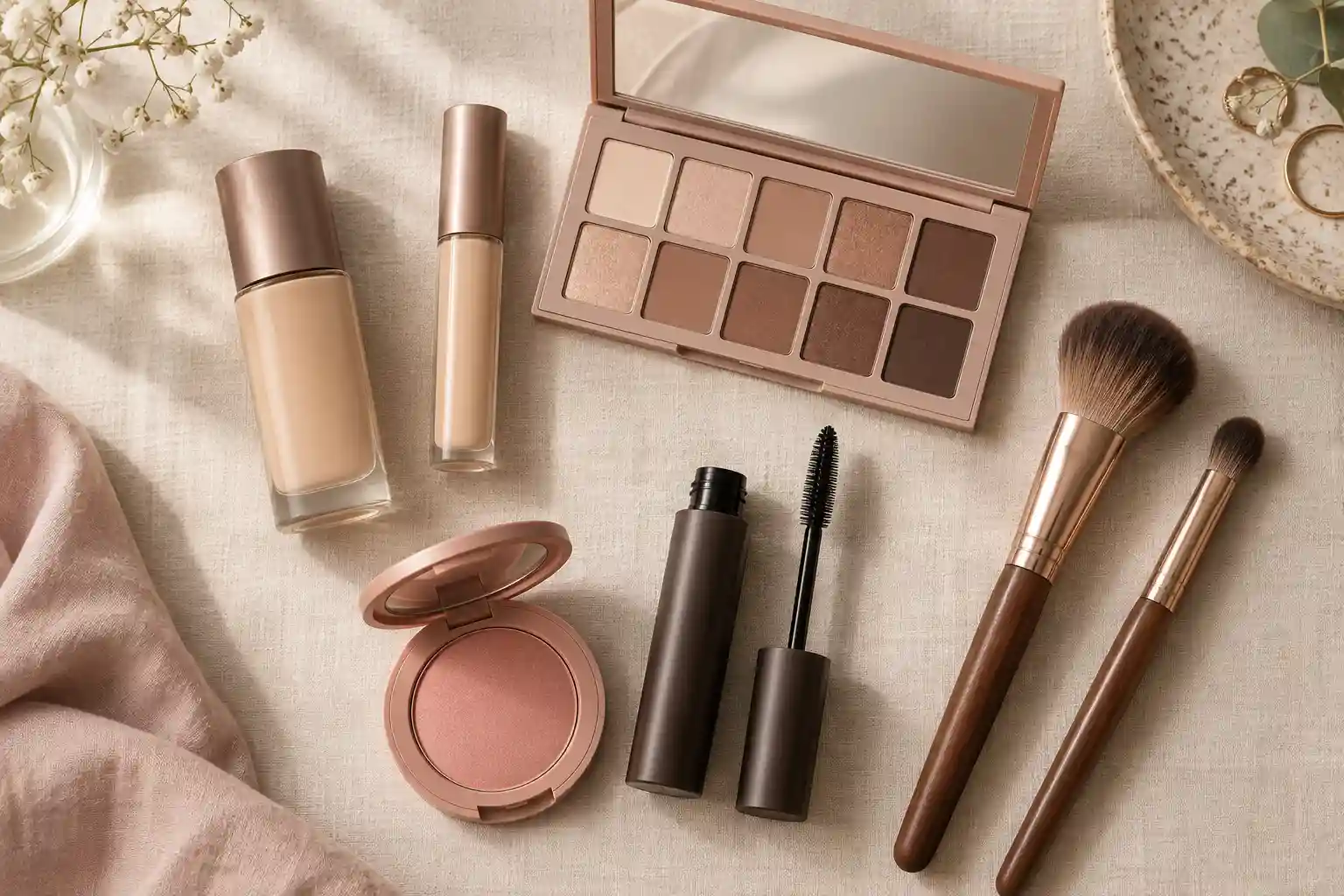
What it is
A starter kit is a small, deliberately limited set of products that covers the core of most everyday looks, without the expense or overwhelm of trying to own one of everything before you know what you actually use. The goal is fewer, more versatile pieces - not a complete collection.
What to actually get
- A base product you can build coverage with. A buildable liquid or cream foundation, or a tinted moisturizer for a lighter need, matched to skin using a jaw-line test in daylight - see Foundation and Color Matching & Undertones.
- Concealer, mainly for under-eyes and any spots that need targeted coverage.
- A cream or powder blush in a shade close to your natural flush after exercise - an easy, hard-to-mess-up way to add color.
- Mascara, the single highest-impact product for most beginners relative to effort.
- A neutral eyeshadow palette with three or four wearable shades rather than a large multi-color set.
- Brow product matched close to natural brow color - a gel or pencil, not both, to start.
- One good multi-use brush and a damp sponge, rather than a full brush set - see Beauty Sponge vs. Brush for Foundation.
How to choose within that list
- Buy the smallest sizes first. Formulas and shades vary enough between brands that testing before committing to full size avoids waste.
- Prioritize base and brows over color products. A clean, well-matched base and groomed brows do more for an overall polished look than eyeshadow color choices.
- Skip anything with a steep learning curve at first. Liquid eyeliner and full contour kits are easier to add once the basics feel comfortable - see Gel vs. Pencil vs. Liquid Eyeliner for an easier starting format.
Common mistakes
- Buying a large palette or full brush set before knowing which colors or tools actually get used regularly.
- Skipping skin prep, which makes every product afterward harder to apply evenly.
- Choosing trend-driven shades over ones that actually suit skin tone and undertone.
- Assuming more product means more finished - thin, buildable layers look better than one heavy pass with most beginner-friendly formulas.