Blush
Color applied to the cheeks to mimic a natural flush and add dimension to the face.
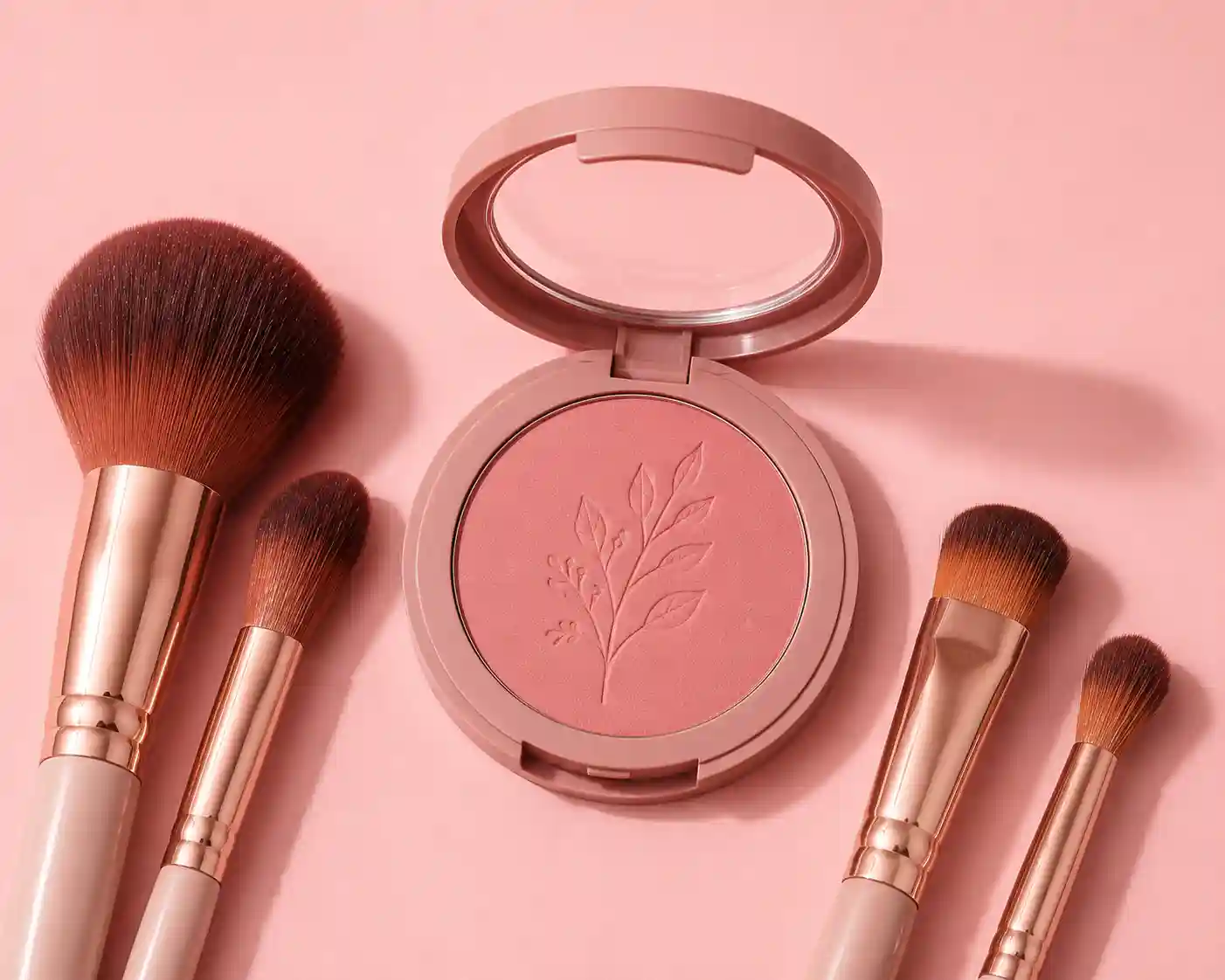
What it is
Blush adds color, not just shape, to the cheeks - where contour and highlight rely on light and shadow, blush relies on pigment to suggest a natural flush of warmth. It's sold as pressed powder, cream, liquid, and stain, each suited to different skin types and finishes.
How it works
Powder blush is pigment bound to a fine powder base (often talc or mica), applied with a brush and buffed to diffuse the color. Cream and liquid blushes suspend pigment in an emollient or water-based base, which lets them melt into skin for a more natural, skin-like finish but makes them harder to build up evenly without practice. Powder is more forgiving and easier to blend; cream tends to look more like real skin flush, especially on drier skin.
How to choose one
- Powder blush suits normal-to-oily skin and is the easiest format to control, especially for beginners.
- Cream or liquid blush suits dry or mature skin better, since powder can cling to dry texture - apply before setting powder so it blends into the base rather than sitting on top.
- Pick a shade based on the color of a natural flush on your skin, not the color in the pan. Cooler pinks tend to suit cool undertones, peachy corals tend to suit warm undertones - but this is a starting point, not a rule.
Common mistakes
- Applying in a small, hard-edged circle instead of sweeping and blending outward, which reads as unnatural rather than as skin.
- Applying at the wrong angle - sweeping straight across the cheek rather than up toward the temple tends to drag the face down.
- Skipping a light hand on reapplication - blush builds up more visibly than most products, so it's easier to add more than to remove excess.