Concealer
A concentrated, high-pigment product used to spot-cover discoloration, blemishes, and under-eye shadows.
What it is
Concealer is a thicker, more pigmented cousin of foundation used to cover specific areas rather than the whole face - under-eye circles, blemishes, redness, and discoloration. Because it's applied in smaller amounts and often layered over foundation, it can carry more pigment without looking heavy overall.
How it works
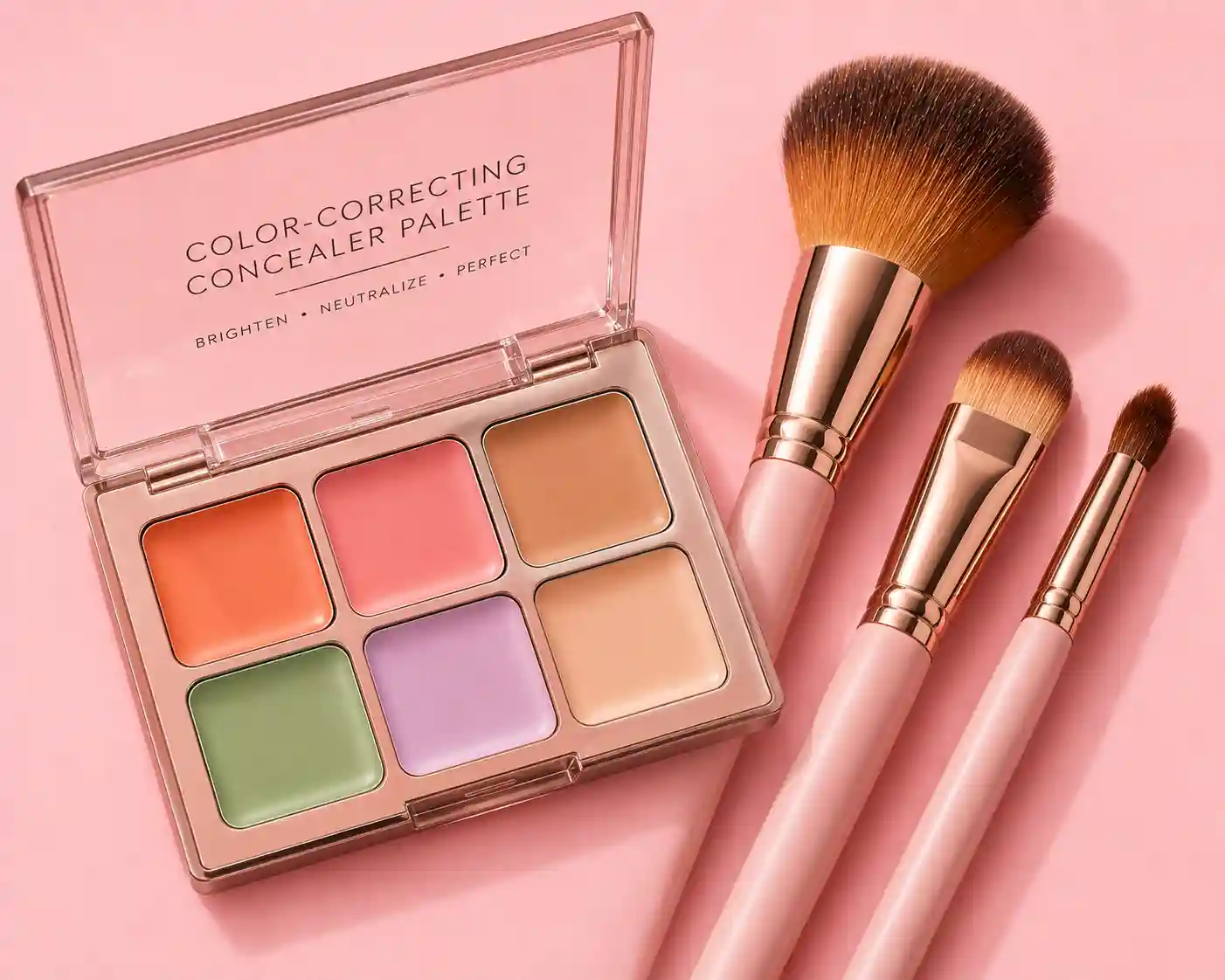
Standard concealers work the same way as foundation, with a higher pigment-to-base ratio for stronger coverage in a small area. Color correctors are a separate category: they use color theory rather than skin-matched pigment, applying an opposing hue (orange/peach to cancel blue-purple under-eye shadows, green to cancel redness) underneath a skin-matched concealer to neutralize discoloration before covering it.
How to choose one
- Under-eye vs. blemish concealer aren't always the same product. Under-eye formulas are usually creamier and lighter-reflecting to brighten; blemish concealers are often matte and thicker to stay put over texture without sliding.
- Go one shade lighter for under-eye brightening, and true-to-skin-tone (not lighter) for spot concealing elsewhere - a too-light concealer on a blemish just draws more attention to it.
- Check the undertone of a corrector against what it's correcting, not against your skin - a corrector's job is to be the opposite of the discoloration, not to match you.
Common mistakes
- Applying concealer before foundation and building up an obvious separate layer instead of concealing after, where less product is usually needed.
- Setting with too much powder, which can settle into fine lines under the eyes and emphasize rather than hide them.
- Using a corrector shade so strong it shows through the final concealer layer - a little goes further than it looks like it will.