Blending Basics
The core skill underneath almost every makeup technique - softening transitions so products read as skin, not layers.
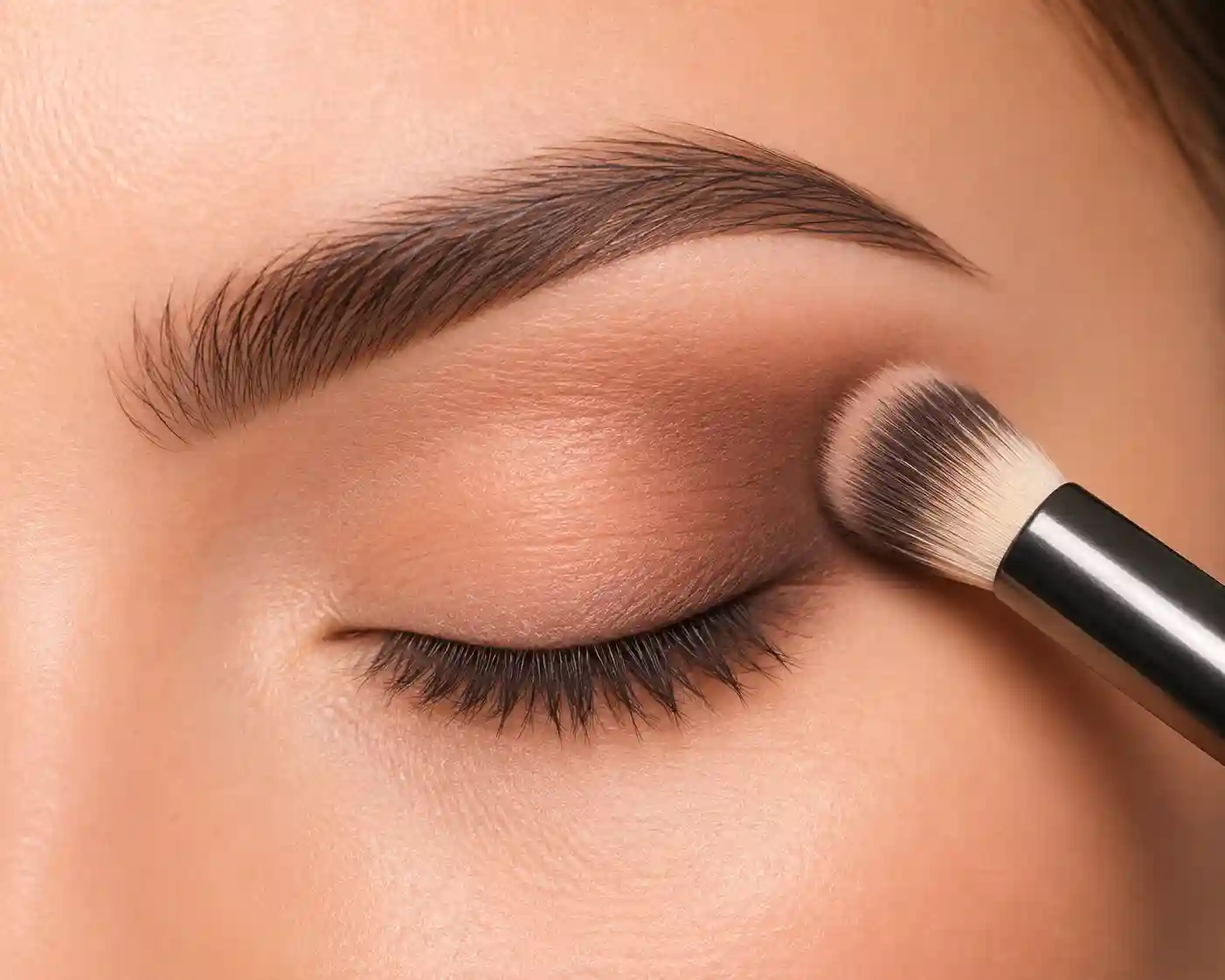
What it is
Blending is the act of softening the edge between two areas of product - two eyeshadow shades, a contour and bare skin, foundation and the jawline - so the transition looks gradual rather than like a visible line. It underlies nearly every other technique on this site; cut crease, contouring, and even basic foundation application all depend on it.
How it works
A hard edge exists wherever product coverage stops abruptly. Blending works by physically moving a small amount of product from the dense, applied area into the adjacent bare area in a diminishing gradient, so the eye can't identify exactly where the product starts. Tools matter here mainly for how much control they give: a fluffy brush covers more area with a lighter touch, a dense sponge pushes product in without dragging it, and fingers (body heat included) can melt cream products into a very fine gradient but with the least precision.
How to do it
- Work while product is still workable. Cream and liquid products blend easily while wet; once they set, blending drags rather than softens.
- Use light, repeated motions rather than one heavy pass. Small circular or windshield-wiper motions move product gradually; one hard swipe just relocates the hard edge instead of softening it.
- Blend from the dense area outward, not the reverse - pulling product from where there's a lot into where there's none creates the gradient; pushing from empty space in can just remove product unpredictably.
- Check work in natural light and from a distance, not just close to a mirror - hard edges are often more visible a few feet away than they are up close.
Common mistakes
- Blending after a product has already dried or set, which drags and patches instead of softening.
- Using tools that are too soft or too fluffy for precise work (like cut crease lines) or too stiff for broad, soft work (like an all-over blush blend).
- Not cleaning tools regularly - product buildup on a brush or sponge stops it from picking up and moving product evenly.