A Polished Look With a Small Makeup Collection
How to build a small, coordinated makeup collection - multi-use products, shades that work together, and packaging that lasts - and get several looks from it.
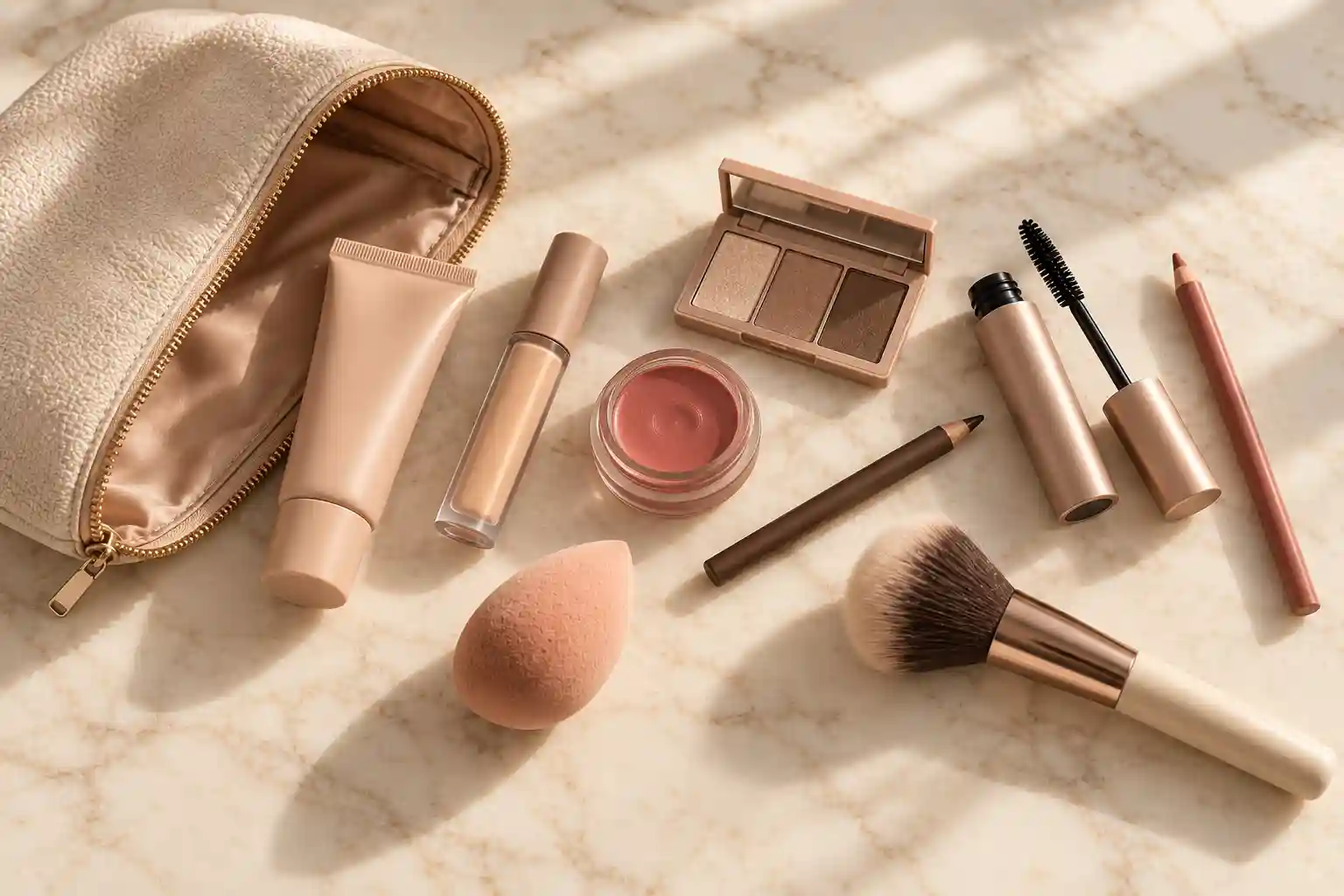
What it is
A small collection is a deliberately edited set of makeup - often ten products or fewer - where every piece earns its place by working with everything else. It isn't about doing without. A well-chosen small collection can cover everyday makeup, a more polished look for work or events, and a deeper evening version, while being quicker to use, cheaper to keep up, and less likely to leave half-used products expiring in a drawer.
How it works
A polished look comes more from technique and coordination than from the number of products used. Three things make a small collection work:
- Multi-use products. Choosing products that can do more than one job - a cream color for cheeks and lips, a matte eyeshadow that also fills brows - covers more of the face with fewer items.
- Shades from one undertone family. When everything sits in the same warm, cool, or neutral family, any combination looks intentional. See Color Matching & Undertones if you're not sure which family suits you.
- Finishes that layer well. Satin and soft-matte products blend into one another and work for both day and evening; very matte or very glittery products only suit some looks.
Building it
Rather than buying by category, choose by the job each product needs to do:
- Even out skin: a buildable foundation or skin tint, plus a concealer. On good-skin days, concealer alone - used only where needed - may be all the base you need. See Foundation and Concealer.
- Add color to cheeks and lips: a cream blush that's also made for lips, often sold as a lip-and-cheek tint. One product gives a coordinated flush - see Blush.
- Warm and shape the face: a matte bronzer in a soft, neutral shade. Swept lightly, it warms the face; blended through the crease, it doubles as an eyeshadow transition shade, as long as the label says it's safe for use around the eyes - see Bronzer & Contour.
- Define the eyes: a small palette, or two or three single shades - a light lid shade, a mid-tone matte, and a deeper brown. The mid-tone or deeper matte shade can also fill in brows with a small angled brush - see Eyeshadow.
- Frame the eyes: a brown or soft black pencil, used softly smudged for day or more defined for evening, plus mascara - see Eyeliner and Mascara.
- Finish the lips: a lip liner close to your natural lip color. Filled in across the whole lip and topped with balm, it works as a long-wearing lipstick - see Lip Liner.
For tools, three do almost everything: a damp sponge for base, a fluffy brush for powder, bronzer, and blending eyeshadow, and a small angled brush for brows, liner, and precise placement. See Beauty Blender and Angled Brush.
Check the label before using any product somewhere it wasn't designed for, especially around the eyes. Lip-and-cheek products and many matte powders are fine for multi-use, but not every product is formulated or tested for the eye area.
Packaging and shelf life
A small collection means you finish products before they expire, and packaging makes more of a difference than it first appears:
- Check the period-after-opening symbol - a small open jar with a number such as "6M" or "12M" - which shows how many months a product stays good once opened. As a general guide, mascara and liquid liner last around three months, liquid foundation and concealer six to twelve months, and powders and pencils longer.
- Choose pumps and tubes over open jars where you can. A pump or squeeze tube keeps fingers and air away from the product, so it stays cleaner for longer. With jars and pots, use clean fingertips or a small spatula.
- Buy smaller sizes. A mini or travel size is often enough to finish before the period after opening runs out, and it's an easier way to test a shade.
- Favor compact, multi-pan packaging - a small palette or a duo - over large palettes where most shades go unused.
Getting several looks from it
The same handful of products can stretch from minimal to evening just by changing how much you use and where:
- Everyday: a sheer layer of base or concealer only, a tap of cream blush on the cheeks and lips, brow gel or a light brow fill, and one coat of mascara.
- Polished: a fuller base, bronzer, the light and mid-tone eyeshadows, a smudged pencil liner, and lip liner topped with balm. See Soft Glam Makeup for a step-by-step version.
- Evening: deepen the outer corner of the eye with the darker brown shade, define the liner more sharply, add a second coat of mascara, and build the blush and lip color to a stronger layer.
What you can skip
- Separate contour and bronzer. A soft, neutral matte bronzer handles both jobs for most everyday looks.
- Color correctors, unless concealer alone doesn't cover dark circles or redness - see Color Correctors.
- Primer, unless you have a specific problem like oil or very visible texture.
- Setting spray, unless your makeup needs to last a long day or you've used a lot of powder.
- Large palettes, where most of the shades go unused.
Common mistakes
- Buying products one at a time in shades that don't relate to each other, so nothing coordinates.
- Choosing very matte or very glittery finishes, which work for fewer looks than satin and soft-matte.
- Keeping products well past their period after opening because they're barely used - with a smaller collection, it's easier to finish things while they're fresh.
- Assuming a polished look needs more products, when it usually needs better blending and coordination - see Blending Basics.