Powder
A translucent or tinted powder used to reduce shine and set liquid or cream products in place.
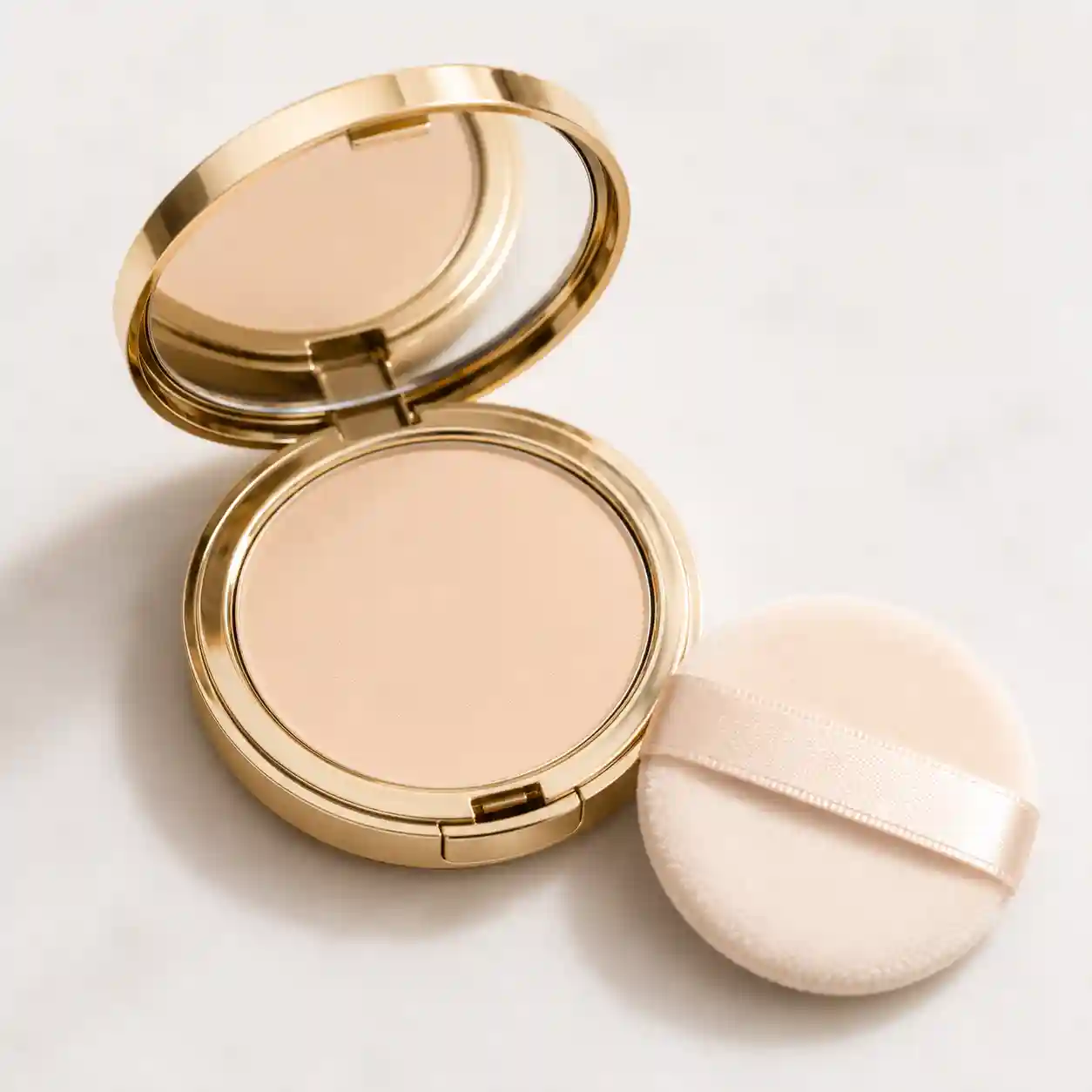
What it is
Powder is a finely milled product pressed or left loose, used mainly to control shine and lock liquid or cream products in place. It comes translucent (no added color, purely for finish and set) or tinted (adding light coverage on top of set).
How it works
Powder works by absorbing surface oil and adding light-scattering particles that reduce the appearance of shine. Pressed onto or dusted over liquid and cream makeup, it also physically caps those products, slowing how much they move or transfer through the day. Translucent powders rely on very fine, often silica-based particles that disappear visually; tinted powders add pigment on top of that same base.
How to choose one
- Translucent suits anyone whose only goal is shine control without adding more color or coverage.
- Tinted or finishing powders work well for touch-ups later in the day, adding a small amount of coverage back without a full re-application of foundation.
- Loose powder sets makeup with a lighter touch; pressed powder is more portable and better suited to touch-ups on the go.
- Watch for flashback: some powders with high mineral content can appear ghostly white in flash photography - a concern mainly for events that will be photographed.
How to apply it
- Let foundation and concealer settle first, for a minute or so, so the powder sets them rather than dragging them around.
- Choose the tool for how firmly you want to set. A large fluffy brush gives a light, even set over the whole face - see Powder Brush. A puff or damp sponge pressed into the skin gives a firmer set for under-eyes and an oily T-zone.
- Tap off the excess from the brush or puff before it touches the face. Most cakiness comes from too much product landing in one spot.
- Press rather than sweep on areas you want firmly set. Sweeping a loaded brush across fresh foundation can move it and leave streaks.
- Concentrate it where shine or creasing shows - the T-zone, around the nose, and under the eyes - and go lighter on the outer cheeks, especially on dry skin.
On deeper skin tones, a white translucent powder can leave a gray or ashy cast, especially in photos. A translucent powder made for deeper skin, or a tinted powder close to your foundation shade, avoids this - see Why does powder look cakey or ashy?.
Common mistakes
- Applying too much all at once instead of building lightly, which can look cakey and settle into fine lines.
- Using a heavily pigmented pressed powder as if it were translucent, adding more coverage (and potential cakiness) than intended.
- Skipping powder entirely on oily skin and wondering why foundation doesn't last - powder is often the difference-maker for wear time, not the base product.