Bronzer & Contour
Warm or cool-toned products used to add sun-kissed color or sculpted shadow to the face.
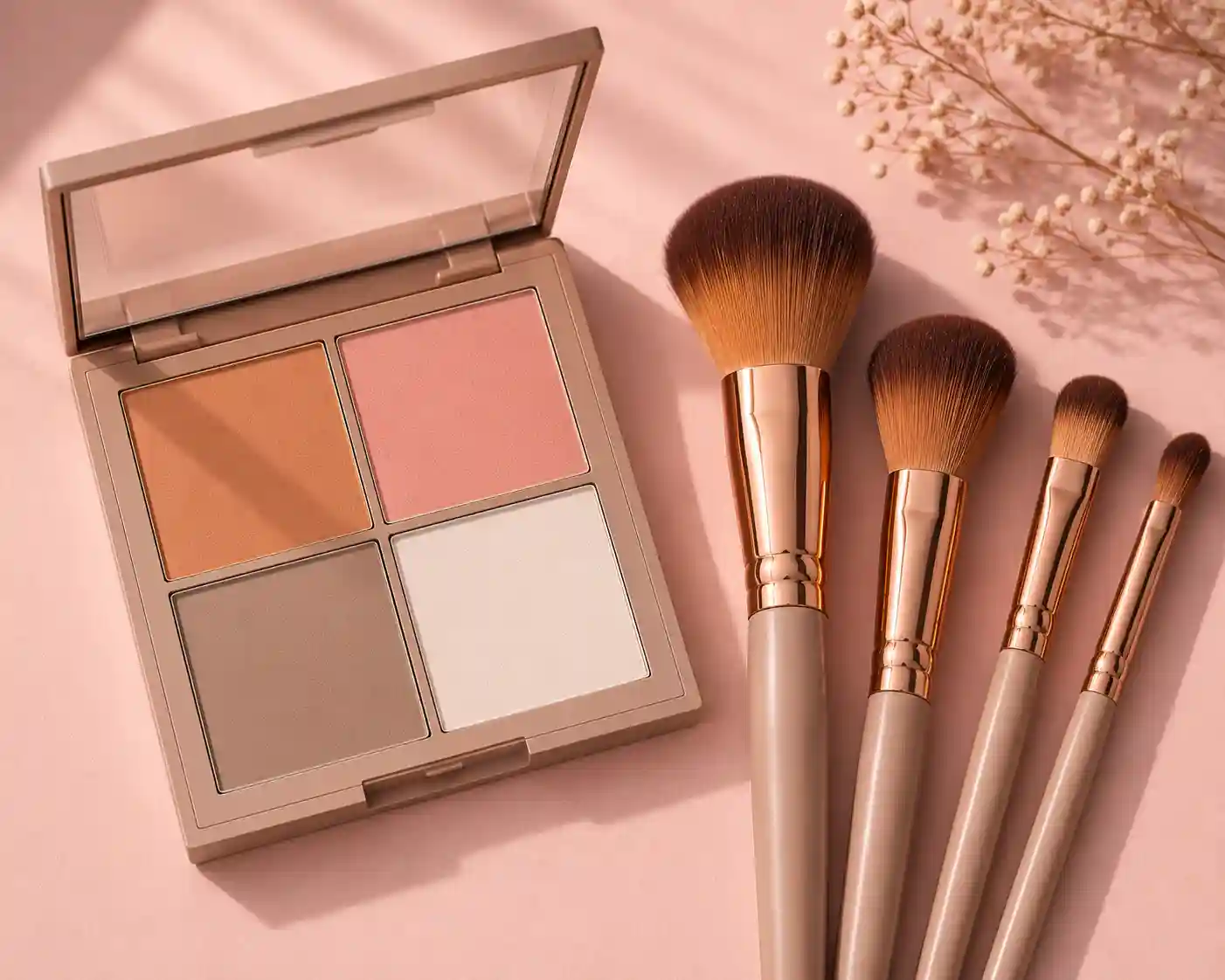
What it is
Bronzer and contour are often confused because they're applied to similar areas of the face, but they do different jobs. Bronzer is a warm-toned product meant to mimic an all-over sun-warmed glow, applied broadly. Contour is a cool- or neutral-toned product meant to mimic shadow, applied narrowly to specific hollows to reshape how the face reads. See Contouring & Highlighting for the technique itself.
How it works
Bronzer's warm undertone (often orange- or terracotta-leaning) reads as sun exposure when swept over the high points of the face - forehead, cheeks, nose, chin - the places the sun would naturally hit. Contour's cooler, more neutral-brown tone is closer to true shadow color, which is why it works when placed precisely in recesses rather than swept broadly; a contour shade swept all over would just look like dirt rather than shape.
How to choose one
- Bronzer: pick a shade only one or two tones deeper than your skin for a natural result - too dark reads as muddy rather than sun-warmed.
- Contour: pick a cool-toned, matte shade regardless of your skin's own undertone - warmth in a contour shade is what makes it look unintentional.
- Cream formulas blend more seamlessly into skin and suit drier skin types; powder formulas are easier to control and suit oilier skin types.
Common mistakes
- Using one product to do both jobs - a warm bronzer swept into the cheek hollow to "contour" usually just looks like misplaced blush rather than shadow.
- Applying bronzer in patches instead of the natural high points, which breaks the sun-kissed illusion.
- Over-blending contour until it disappears, or under-blending it into a visible stripe - both undercut the shaping effect it's meant to create.