Eyeshadow
Pigmented powder or cream applied to the eyelid and surrounding area to add color, depth, or dimension.
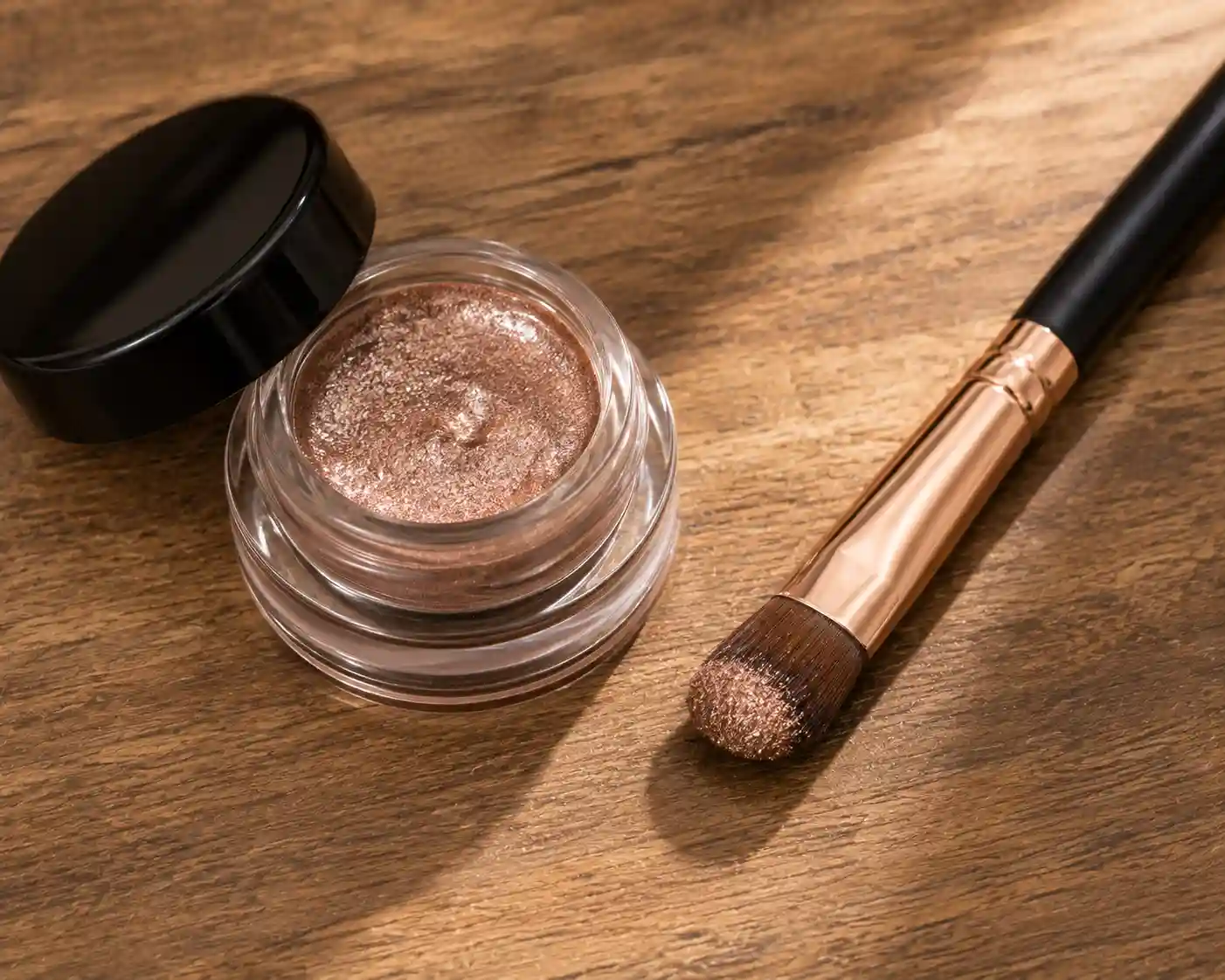
What it is
Eyeshadow is pigmented product applied around the eyes, ranging from a single all-over wash of color to multi-shade looks that build shape and depth. It's sold as pressed powder, loose pigment, cream, and stick formulas, each handling differently.
How it works
Powder eyeshadow deposits pigment through friction - the brush picks up particles and deposits them where dragged, which is why blending (moving those particles gradually into surrounding skin) is central to how a finished look reads. Cream and stick formulas deposit more pigment per swipe and set into place, making them easier for beginners to apply evenly but harder to blend multiple shades together once set.
How to choose one
- Matte shades are the easiest to blend into a soft transition and work well in the crease to build depth.
- Shimmer and metallic shades show best on the lid itself, where they catch light, rather than blended into a soft edge.
- Powder formulas offer the most control for multi-shade looks; cream formulas are faster for a simple, one-shade wash of color.
- Buy a small, cohesive palette before single pans - a well-chosen palette of matte transition shades plus one or two shimmers covers most looks without needing a large collection.
Common mistakes
- Skipping a transition shade in the crease, which leaves color looking flat instead of dimensional.
- Applying shimmer with a fluffy blending brush, which scatters the shimmer's fine particles instead of depositing them densely where they can catch light.
- Not using an eyeshadow primer or base on oily lids, where shadow can crease or fade within a few hours without one.