Blending Brush
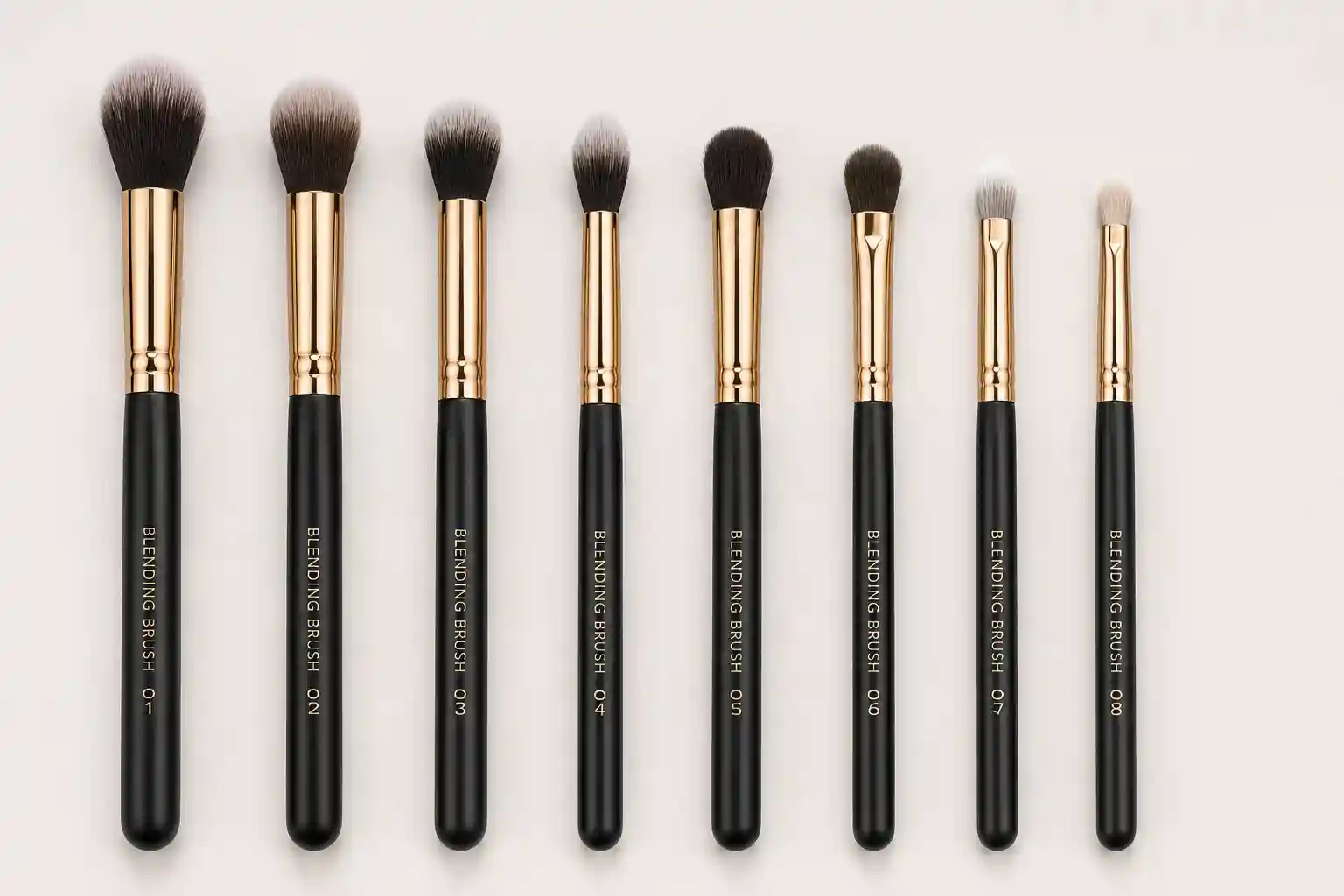
A soft, fluffy brush used to diffuse the edges between eyeshadow shades so transitions look seamless.
What it is
A blending brush is a soft, fluffy, usually domed brush sized for the eye area, used specifically to soften the line between two eyeshadow shades rather than to deposit color itself. It's a finishing tool, typically used after color has already been placed with a flatter, more precise brush.
How it works
Loosely packed, soft bristles pick up almost no product themselves, so passing the brush back and forth over the boundary between two shades moves a small amount of pigment from the more saturated area into the lighter one, gradually diffusing the edge. Because the brush deposits so little of its own color, it can be reused across the transition repeatedly without muddying the look - the softening effect comes from movement, not more product.
How to choose one
- Very soft, loosely packed bristles are essential - a dense or stiff brush will deposit color instead of softening it.
- A tapered or slightly rounded tip follows the crease and socket line of the eye more naturally than a flat one.
- Keep at least one dedicated purely to blending, used with little to no product, separate from brushes used to place color.
How to use it
- Start with a clean or nearly clean brush. If using it to apply a transition shade, tap off the excess thoroughly first.
- Hold it near the end of the handle. This naturally lightens your pressure, which is what lets the brush soften rather than smear.
- Use small back-and-forth "windshield wiper" strokes along the crease, then small circles at the edges where two shades meet.
- Work from the outer corner inward, since that's usually where the deepest color sits and where blending matters most.
- Stop as soon as the edge looks soft - see Blending Basics and Eyeshadow.
Care and when to replace
- Wipe it between shades on a dry cloth or textured cleaning pad to remove most of the color without a full wash.
- Wash it every one to two weeks - see Tools Cleaning & Hygiene.
- Replace it when the bristles lose their shape or start to feel scratchy instead of soft.
Common mistakes
- Loading the brush with product and using it to blend, which just moves concentrated pigment around instead of softening an edge.
- Overworking the same area for too long, which can start lifting and dulling color that was already placed well.
- Using a brush too large for the eye's crease, making it hard to control exactly where the blending happens.