Beauty Sponge vs. Brush for Foundation
Sponges and brushes apply foundation with different finishes, different coverage ceilings, and different upkeep.
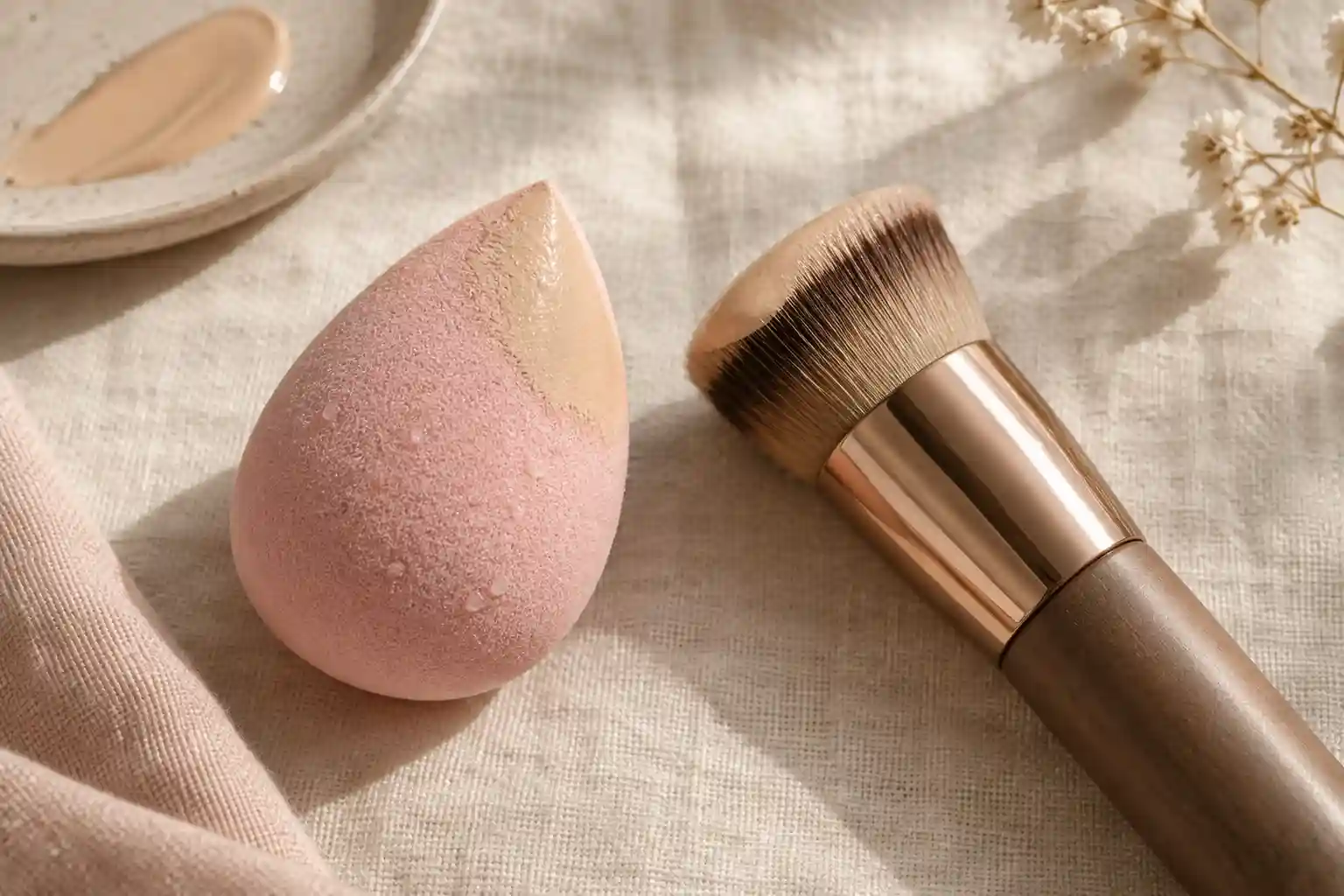
Both tools apply liquid and cream foundation, but the way each one deposits product changes the finish and the amount of coverage that's realistic to build.
Beauty sponge
A damp sponge, used in a bouncing or stippling motion, presses foundation into skin rather than laying it on top, which generally gives a more natural, skin-like finish and helps blend product into pores and fine lines. It absorbs some product into itself, meaning a bit more product is used per application than with a brush, and it takes slightly longer to clean thoroughly since it holds onto product deep in the material. See Why does a beauty sponge leave streaks? for what goes wrong when the technique is off.
Brush
A foundation brush deposits product directly onto skin with very little absorbed into the tool itself, which makes it more product-efficient and faster for building higher, more even coverage. Brushes give more control over precise areas like around the nose and eyes, and different bristle densities and shapes suit different finishes, from airbrushed to more textured. The tradeoff is that brush strokes can leave visible lines if blending isn't thorough, and dense, less flexible brushes can sit more visibly on top of skin than a sponge does.
Bottom line
A sponge generally gives a more natural, lower-maintenance-looking finish and is more forgiving for beginners; a brush gives more control, builds coverage faster with less product wasted, and is the better choice for full-coverage, precise work. Many routines use a brush to place foundation quickly and a damp sponge afterward to press and blend it into a seamless finish.