Color Matching & Undertones
How to find a foundation or concealer shade that actually matches your skin, not just its lightness.
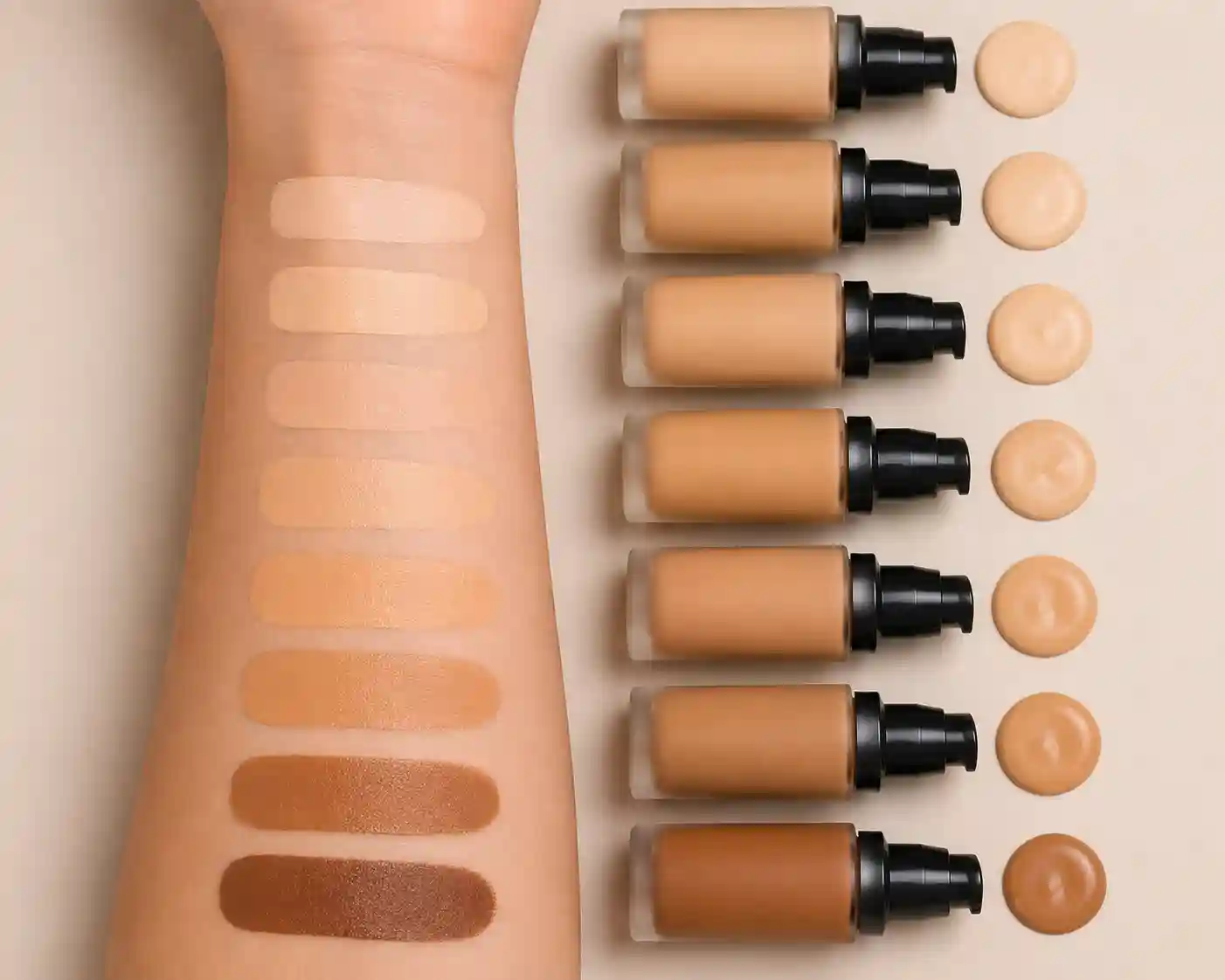
What it is
Color matching is finding a product shade that matches skin in both depth (how light or dark) and undertone (the underlying warmth or coolness of the skin). Two people can share the exact same depth and still need different shades if their undertones differ - this is why a foundation can look "right" in a mirror and still look off in daylight.
How it works
Undertones are usually grouped into three broad categories: warm (yellow or golden base), cool (pink or blue base), and neutral (a balance of both). Skin depth and undertone are independent of each other - a person can be light-skinned and warm, dark-skinned and cool, or any other combination. Manufacturers encode this in shade names and numbers inconsistently, which is why swatching in person (or against an accurate photo in natural light) beats shopping by shade name alone.
How to find yours
- Look at the veins on your inner wrist in natural light. Green-ish veins tend to suggest warm undertones; blue or purple-ish veins tend to suggest cool undertones. This is a starting point, not a diagnosis.
- Swatch along the jawline, not the hand or wrist, and check it in daylight - indoor lighting, especially warm bulbs, distorts how a shade reads.
- Let a swatch sit for a few minutes. Some formulas oxidize and shift slightly darker or warmer after application, so an immediate match can drift off within 10–15 minutes.
- When between two shades, undertone match beats exact depth match. A slightly-off depth blends more easily than a correct depth with the wrong undertone.
Special cases
- Olive undertones have a slightly green or gray cast that doesn't fit neatly into warm or cool. Many foundations look either too pink or too yellow-orange on olive skin, so look for shades labeled olive, or neutral shades with a golden rather than pink base.
- Deeper skin tones often have red, golden, or neutral undertones - and frequently more than one depth across the face, with the perimeter darker than the center. Matching the center of the face and warming the edges with bronzer, or blending two foundation shades, gives a more even result than one shade alone.
- Very fair skin often leans pink or neutral. If the lightest shade in a range is still too dark or too yellow, a white or lightening mixer can adjust it.
- Seasonal changes in skin tone are common. Mixing a lighter and a darker shade of the same foundation lets you adjust through the year without buying a new shade each time - see Foundation.
Common mistakes
- Assuming undertone is fixed by ethnicity or general skin depth - it varies independently and needs to be checked individually.
- Matching under artificial store lighting, particularly warm-toned lighting that shifts every shade warmer than it will look outdoors.
- Judging a match immediately after application instead of waiting for a formula to oxidize and settle.