Gel vs. Pencil vs. Liquid Eyeliner
The three main eyeliner formats trade off precision, ease of use, and staying power in different ways.
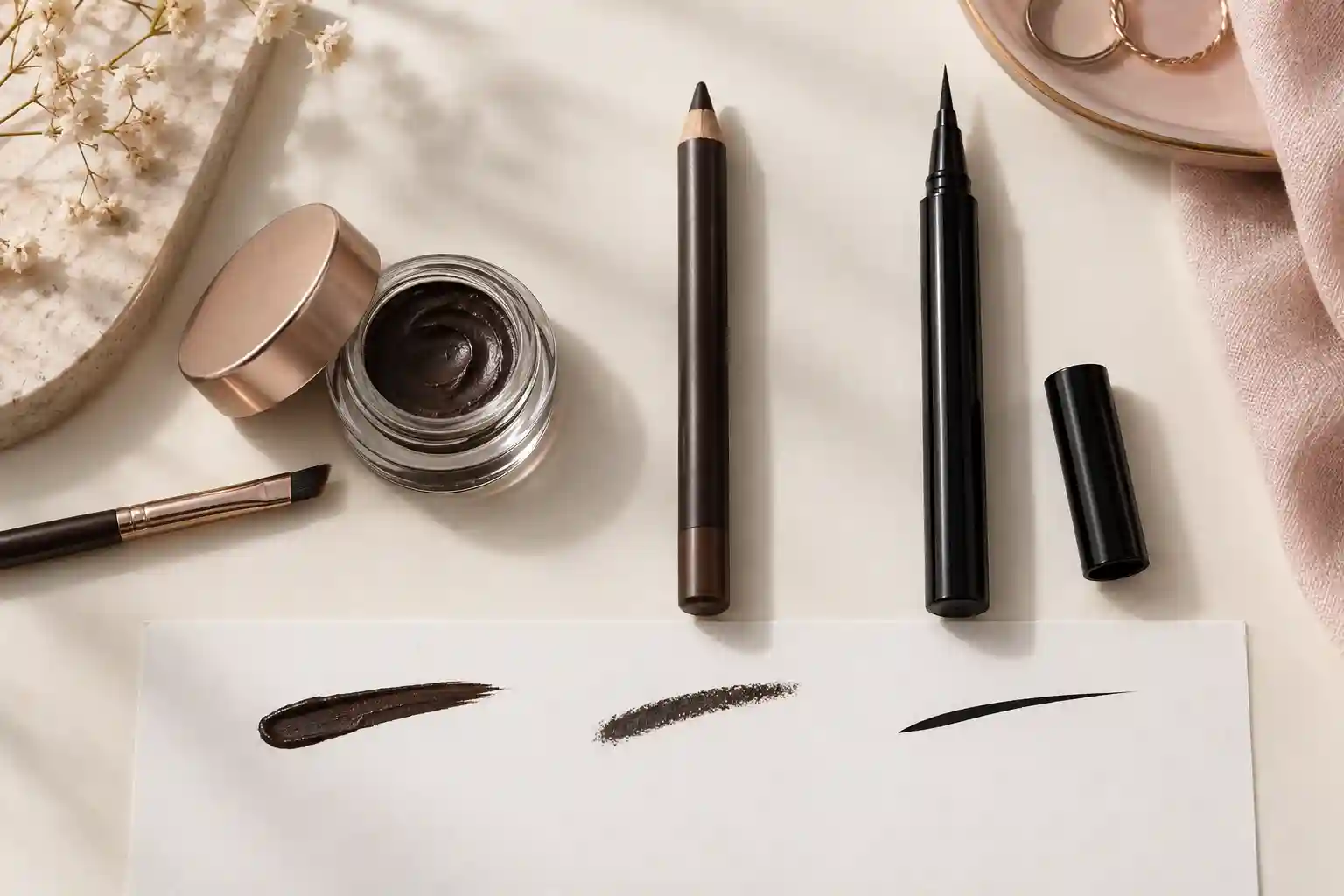
Eyeliner comes in three formats that each solve the same basic problem - defining the lash line - with a different tradeoff between control, speed, and how long the result lasts.
Pencil eyeliner
Pencil is the softest and most forgiving format to apply, which makes it a common starting point for tightlining, smudged looks, and the waterline. It's the easiest to blend and correct mid-application, but that same softness is also what makes it the most prone to smudging and transfer over the course of a day, particularly on oily lids.
Gel eyeliner
Gel liner, applied with a small angled brush, sits between pencil and liquid in both control and longevity. It gives more precision than pencil while still allowing some softness in the line, and it generally dries down to a longer-wearing finish than pencil once fully set. It requires a separate brush and slightly more practice to apply evenly than pencil does.
Liquid eyeliner
Liquid liner, whether a felt-tip pen or a brush-and-pot, gives the sharpest, most defined line and holds up the longest through the day once dry, making it the standard choice for crisp winged looks. It's the least forgiving to apply - mistakes are harder to soften or correct than with pencil or gel - and it demands a steadier hand and more practice.
Bottom line
Pencil suits softer looks, the waterline, and anyone newer to eyeliner; gel is a middle ground offering more definition than pencil with more forgiveness than liquid; liquid gives the sharpest, longest-wearing line but has the steepest learning curve. Many routines use more than one format for different parts of the eye - pencil on the waterline, liquid or gel along the lash line.