Mascara
A pigmented product applied to the eyelashes to add length, volume, curl, or definition.
What it is
Mascara coats the eyelashes in pigmented product to make them appear darker, longer, thicker, or more curled, depending on the formula and the brush (wand) shape it comes with. It's one of the most universally worn products because the effect is immediate and doesn't require blending skill.
How it works
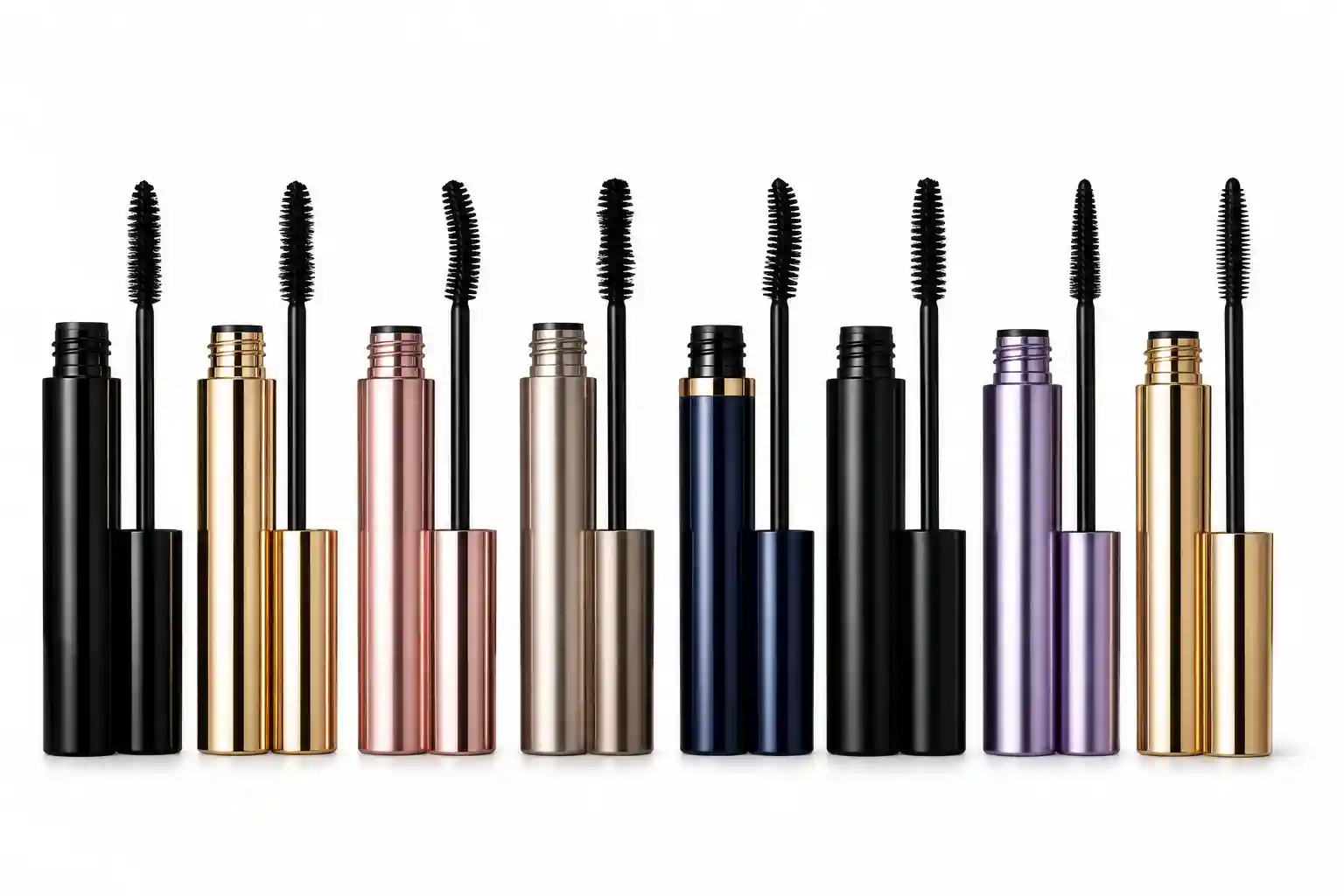
A polymer- and wax-based formula coats each lash in a thin film that darkens it and adds physical volume once dry. The wand shape does most of the differentiating work between mascaras: a tapered brush reaches small inner-corner lashes, a curved brush encourages an upward curl as it's applied, and a densely bristled brush deposits more product per stroke for a bolder, more voluminous result.
How to choose one
- Curl first, then apply if using a lash curler - mascara applied afterward helps hold the curl in place.
- Lengthening formulas typically contain fine fibers; volumizing formulas use a thicker, waxier base - some formulas aim to do both, with tradeoffs in clumping risk.
- Waterproof formulas last through humidity and tears but need a dedicated remover, and can be more drying to lashes with frequent use.
- Replace every three months. Mascara is used near the eye and repeatedly pumped, which introduces bacteria over time regardless of formula.
How to apply it
- Curl lashes first, if you use a curler - never after mascara, when lashes are stiff and more likely to bend or break. See Eyelash Curler.
- Wipe excess off the wand on the rim of the tube or a tissue. Less product on the brush gives more control and fewer clumps.
- Start at the root and wiggle up. Press the wand into the base of the lashes, wiggle it gently side to side, then pull it up and out through the tips.
- Angle the wand for the corners. Hold it vertically and use the tip for the small inner and outer corner lashes. For lower lashes, use the tip lightly or skip them entirely for a softer look.
- Add a second coat while the first is still slightly wet. Layering over fully dried mascara is what usually causes clumps and flaking - see Why does mascara flake during the day?.
Common mistakes
- Pumping the wand in and out of the tube, which pushes air (and bacteria) into the tube rather than picking up more product.
- Applying a single thick coat instead of a few thin ones, which is more likely to clump.
- Wiggling the wand only at the base of the lashes and skipping the tips, missing length that a full top-to-bottom stroke would add.