Angled Brush
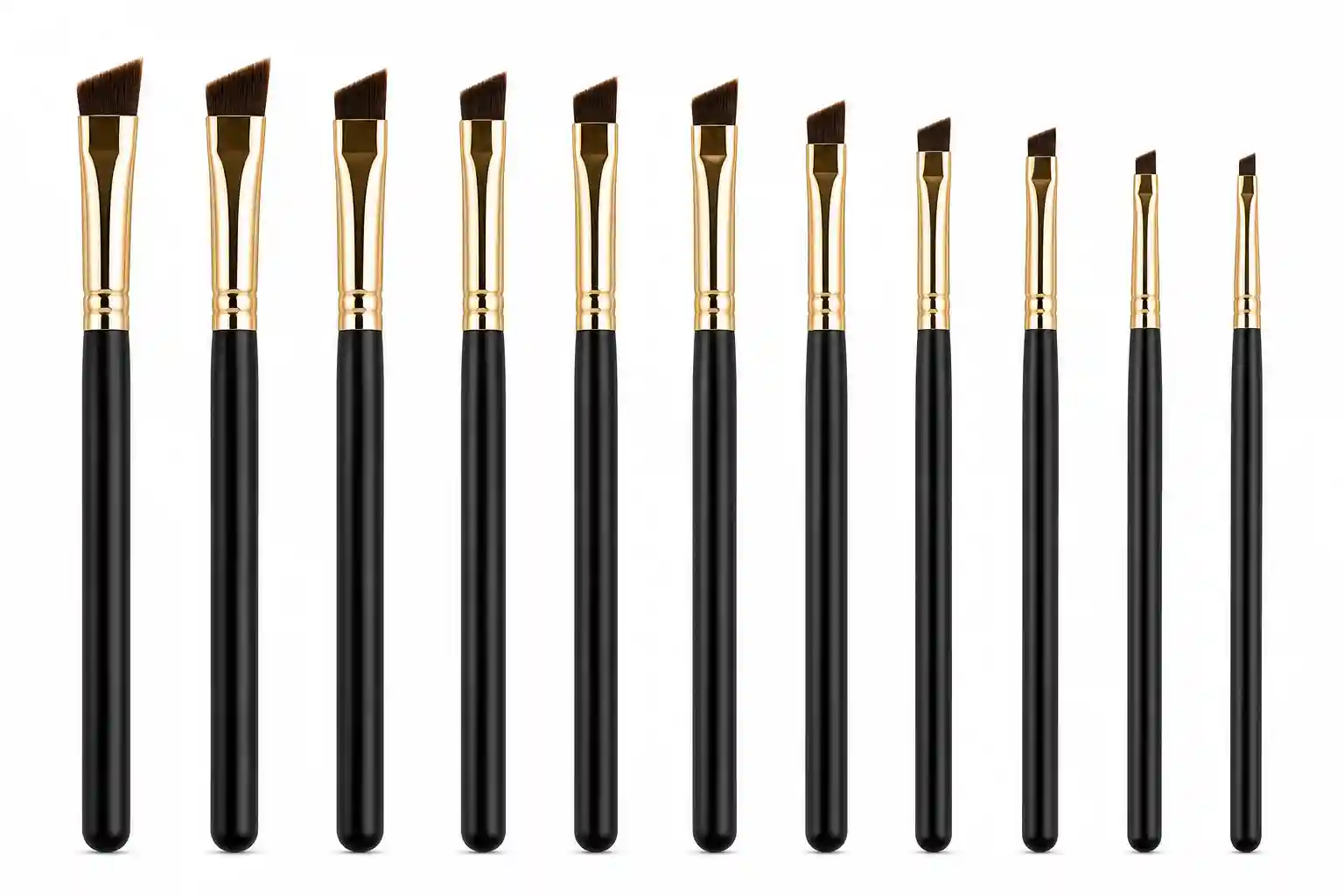
A flat brush cut on a diagonal, used for precise, directional placement of powder or cream product.
What it is
An angled brush has bristles cut on a slant rather than flat or domed. The angle isn't decorative - it lets the brush lay flat against a contour of the face (the brow bone, the hollow of the cheek, the jawline) and deposit product along a controlled line rather than a broad, diffuse area.
How it works
Dragging the angled edge along a feature - under the cheekbone, along the jaw, through the brow - deposits product in a defined stripe that follows the brush's angle rather than the wrist's. This makes it easier to place product with intent (a contour line, a brow shape) than a rounder brush, which spreads product more broadly and is harder to keep off adjacent skin.
How to choose one
- Firmer, denser bristles hold a crisper line, which matters more for brow and contour work than softness.
- Size to task: a small angled brush suits brows and eyeliner; a medium one suits contour and blush placement.
- Synthetic bristles work well for cream and powder products and are easier to clean than natural hair for daily product-heavy use.
Common mistakes
- Using too much pressure, which fans the bristles out and loses the crisp edge the angle is built to create.
- Choosing a brush too large for the feature being defined - an oversized angled brush is hard to control for something as narrow as a brow.
- Not cleaning between cream and powder use, which lets cream product gum up bristles and drag rather than deposit cleanly.