Brow Pomade
A thick, highly pigmented cream applied with an angled brush for bold, long-wearing, fully defined brows.
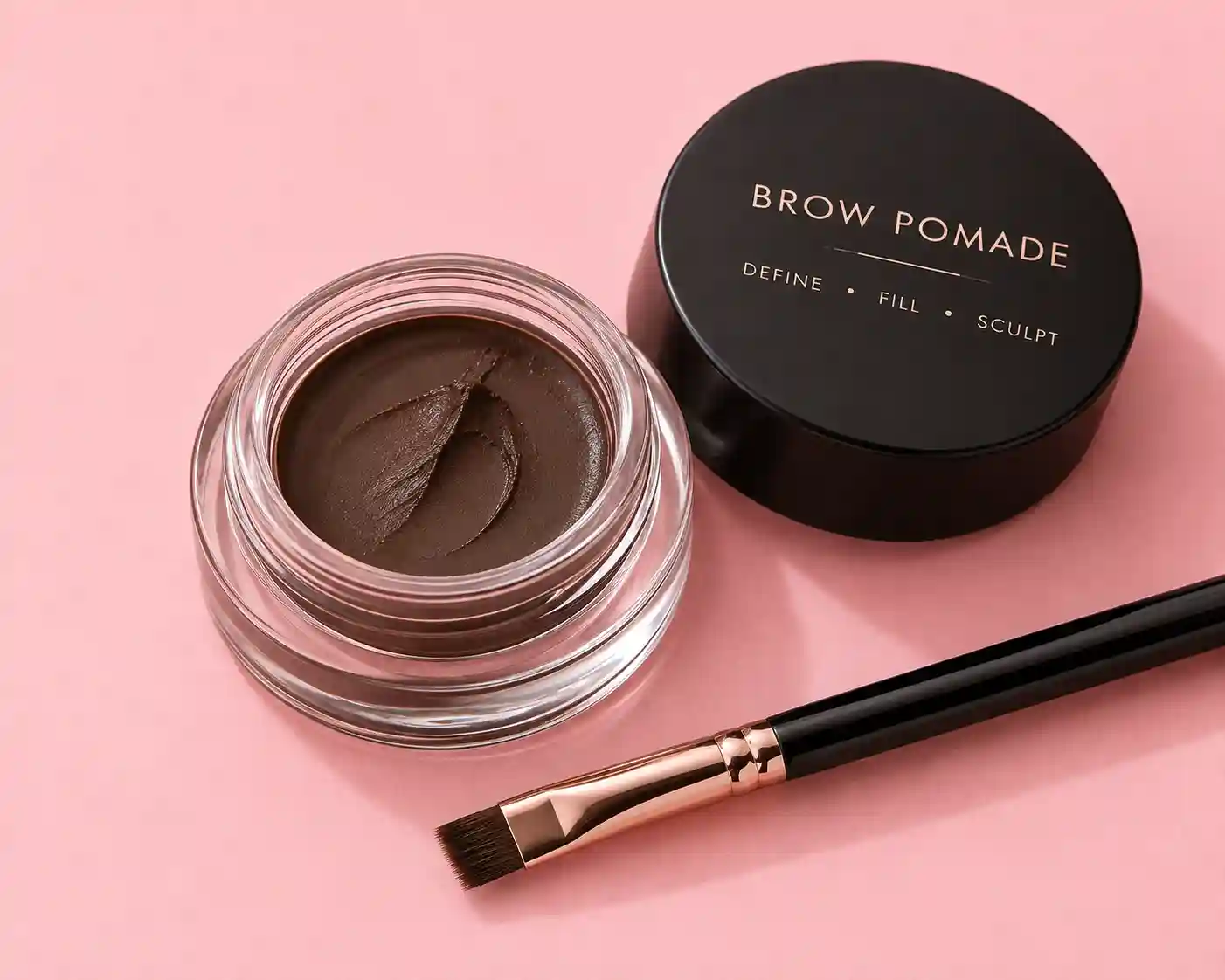
What it is
Brow pomade is a thick, waxy, densely pigmented cream, applied with a stiff angled brush rather than drawn on directly. It's built for fully filling and sharply defining brow shape, giving the boldest and longest-wearing result of the three main brow formats - and, used heavily, the least forgiving one.
How it works
A high concentration of pigment in a firm wax base means pomade deposits more color per stroke than pencil or gel, and holds that shape firmly once it sets. That combination makes it the most reliable format for very sparse brows that need real reconstruction of shape, or for long days where a lighter product might fade or shift. The same density that makes it long-wearing is also what makes overapplication read as a solid, obviously drawn-on block rather than natural hair.
How to choose one
- Tub formulas give the most control over how much product loads onto the brush, better for building shape gradually.
- Pen-style pomades are faster to apply and more travel-friendly, at the cost of some precision compared to a tub and brush.
- Softer pomades blend more forgivingly for a natural look; firmer pomades hold the sharpest, most defined edge - the right choice depends on how bold a shape is actually wanted.
How to apply it
- Load very little onto a stiff angled brush, then work it into the bristles on the back of your hand so there's no heavy blob at the tip - see Angled Brush.
- Start at the arch and tail, where brows usually need the most definition, using fine, hair-like strokes along the lower edge and through any gaps.
- Use what's left on the brush for the front. Little or no added product at the start of the brow keeps it soft rather than blocky.
- Spoolie upward through the front of the brow to diffuse the pomade into the hairs and blur any hard edges.
- Sharpen the edge only if you want a defined look. Concealer traced under the brow with a small flat brush cleans up the shape; for a softer look, skip this step.
Common mistakes
- Overfilling into a solid, uniform block instead of following the brow's natural taper - pomade is the format most prone to a harsh, drawn-on result; see Why do eyebrows look too harsh or drawn-on?
- Skipping a spoolie brush afterward to soften the edges of what's been filled in.
- Applying a full, firm layer on very oily skin without setting it, where it can shift more over the day than a lighter pencil application would.
- Using the densest, boldest formula for a first attempt - a softer pomade is more forgiving while still learning brush control.