Contouring & Highlighting
Using shadow and light to reshape how the face reads, rather than adding color to it.
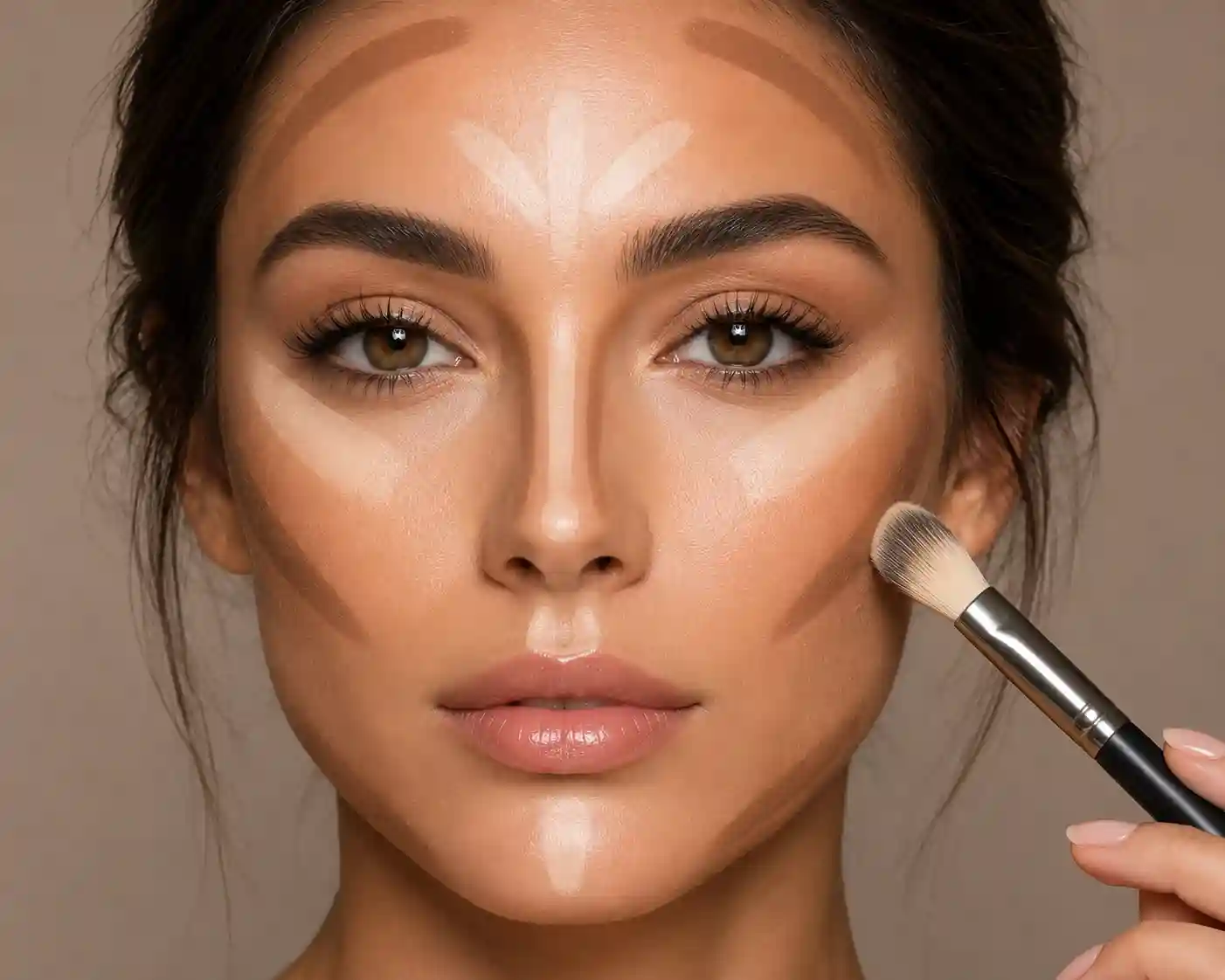
What it is
Contouring uses a shade darker than skin to mimic shadow, and highlighting uses a shade lighter or more reflective than skin to mimic light hitting a raised surface. Together they change how the structure of the face appears to catch light, without changing its actual shape - the same principle sculptors and portrait painters use, applied with product instead of physical material or paint.
How it works
Faces read their shape from where light and shadow naturally fall - the recession under the cheekbone, the sides of the nose, the jawline. Placing a matte, cool-toned product slightly darker than your skin in those natural shadow areas exaggerates them; placing a lighter or shimmering product on the high points (cheekbones, brow bone, bridge of the nose) exaggerates where light would naturally catch. Blending the transition between the two is what makes it read as shape rather than as stripes of color.
How to do it
- Apply foundation and concealer first. Contour and highlight are shaping tools, not base coverage - they work best over an already-even base.
- Place contour in the natural hollows: just under the cheekbone, along the hairline, and at the sides of the nose if desired. Use a light hand - it's easier to add than remove.
- Blend immediately with a clean brush or damp sponge, using upward, circular motions so the edge softens into skin rather than sitting as a visible line.
- Place highlight on the high points: top of the cheekbones, brow bone, bridge of the nose, cupid's bow.
- Blend the edges where contour and highlight meet so the transition looks like natural light falloff, not two separate colors touching.
Common mistakes
- Using a contour shade that's warm or orange-toned instead of cool/neutral - warm contour reads as dirt or a poorly blended tan rather than shadow.
- Placing contour too low or too far from the actual bone structure, which distorts the face instead of sculpting it.
- Skipping the blend step between contour and highlight, leaving a visible hard edge instead of a gradient.
- Over-applying highlight on textured skin, which can emphasize pores and fine lines rather than glow.