Brow Shaping
Defining brow shape through a combination of hair removal and product to suit the face's natural proportions.
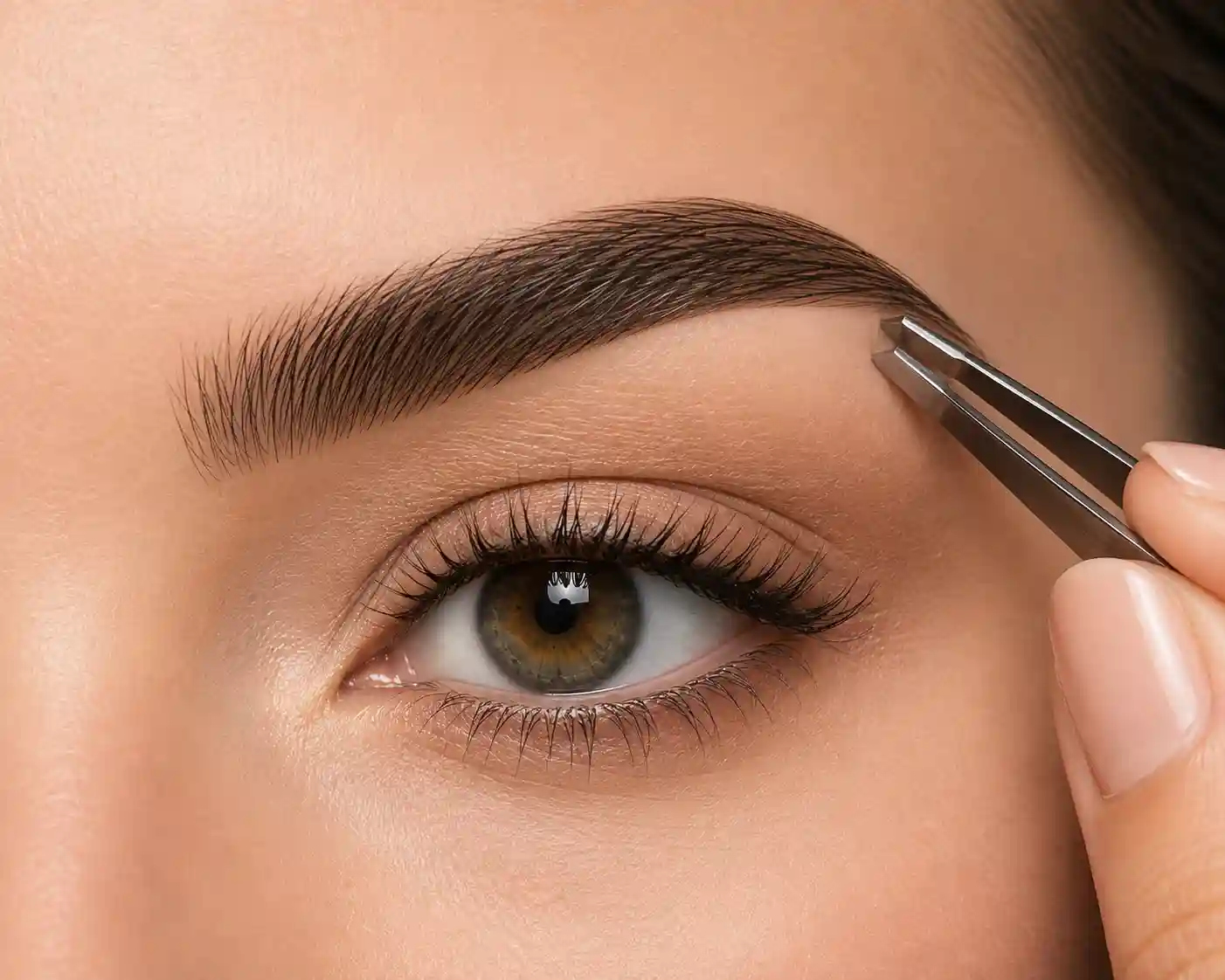
What it is
Brow shaping combines removing stray hairs and filling sparse areas to create a defined shape that suits the individual proportions of a face, rather than applying one universal shape to everyone. Because brows frame the eyes, even small shape changes noticeably affect how the whole face reads.
How it works
Brow shape is usually mapped using three reference points held against the face: the start of the brow (aligned roughly with the side of the nose), the arch (aligned roughly with the outer edge of the iris looking straight ahead), and the end (aligned roughly with the outer corner of the eye and the edge of the nose). Hair between and above those natural guide points is generally left, while stray hairs clearly outside the shape are removed - the point of the guide points is to work with the brow's existing natural shape, not overwrite it entirely.
How to do it
- Map the three reference points - start, arch, and end - using a pencil or brush handle held against the face for a straight line.
- Remove only hair clearly outside the mapped shape, working gradually rather than removing everything at once.
- Brush hairs upward and trim any that extend visibly past the top edge of the shape, if length needs controlling.
- Fill sparse areas with product, following the natural growth pattern rather than drawing a uniform block.
- Set with clear or tinted brow gel to hold both the natural hairs and any filled-in areas in place.
Common mistakes
- Over-plucking above the brow, which is much slower to grow back than hair removed from below and can permanently thin the shape if done repeatedly.
- Forcing symmetry between two brows that are naturally slightly different, which often looks more unnatural than embracing minor asymmetry.
- Choosing a shape based on a trend rather than the face's own proportions and natural growth pattern.