Tools Cleaning & Hygiene
How and how often to clean brushes and sponges to keep them working well and safe to use on skin.
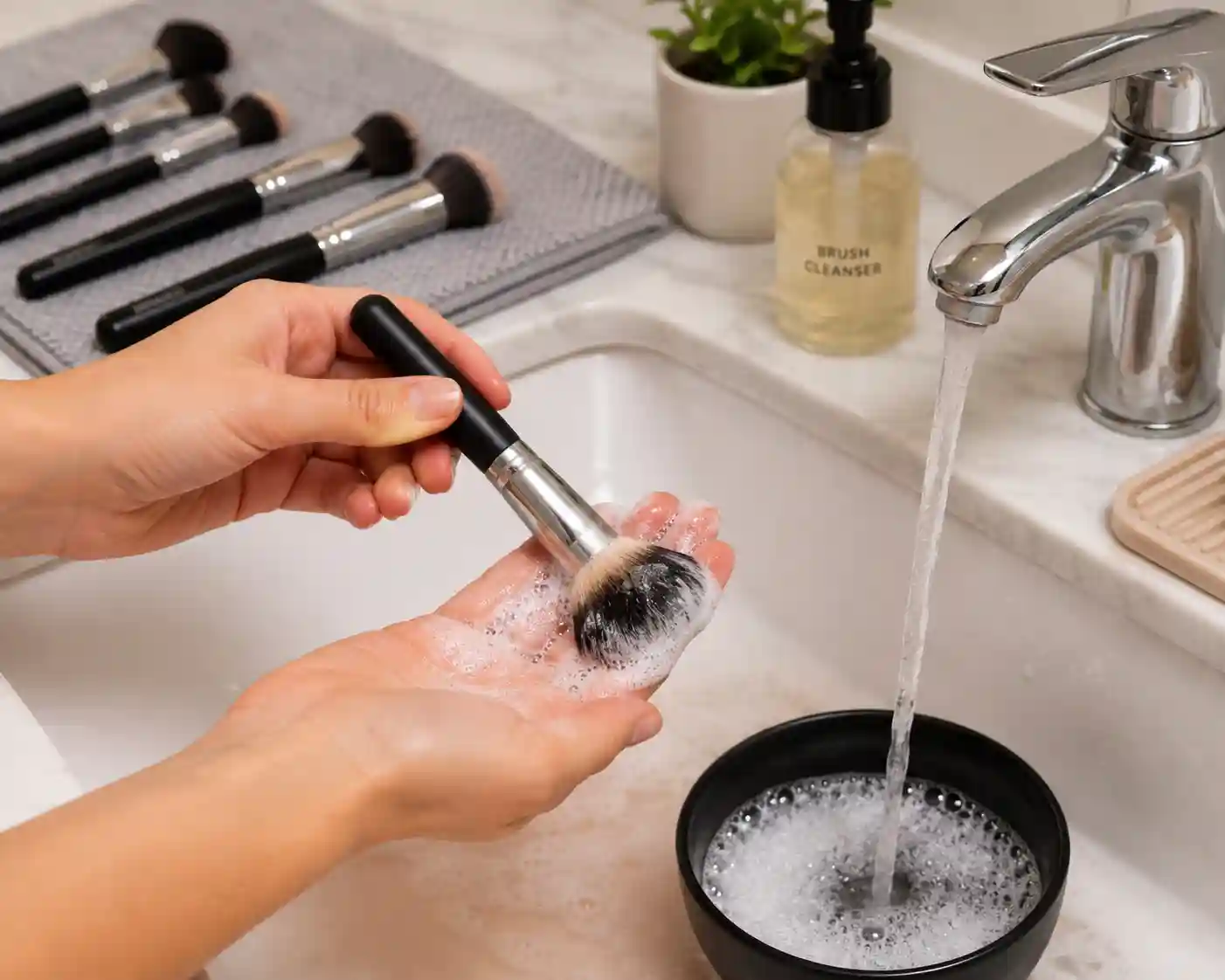
What it is
Tools used on the face repeatedly collect oil, product residue, dead skin cells, and bacteria - cleaning them regularly is a hygiene practice, not just a maintenance one. Dirty tools can contribute to breakouts and irritation independent of how good the products applied with them are.
How it works
Product residue (usually oil- or wax-based) traps bacteria and dead skin at the base of bristles or inside a sponge's pores, where it isn't visible from the surface. A proper wash uses a cleanser that breaks down that oil-based residue and rinses it away, rather than just wiping the visible surface color off the outside - a brush can look clean after a quick surface wipe and still be carrying buildup underneath.
How to do it
- Wet bristles or the sponge with lukewarm water, avoiding fully submerging brush handles, which can loosen the glue holding bristles in place over time.
- Work a small amount of brush cleanser into the bristles, massaging gently in the palm of your hand to work it down to the base, not just the tips.
- Rinse until the water runs clear, repeating the cleanser step if residue is still visible.
- Reshape bristles by hand and lay flat or hang to dry - standing brushes bristle-up while wet can let water seep into the handle and loosen it.
- Let dry fully before storing, since a damp brush or sponge stored away is exactly the environment bacteria need to grow.
Common mistakes
- Washing brushes only occasionally instead of on a regular schedule - a light wash every one to two weeks, with sponges washed even more often, keeps buildup from accumulating.
- Standing brushes bristle-up to dry, which can trap water at the base and loosen the glue over time.
- Using harsh dish soap or hand soap as a regular substitute for a proper brush cleanser, which can dry out and damage natural hair bristles with repeated use.