Makeup for Mature Skin
How formula, finish, and technique choices shift as skin loses some of its natural elasticity and moisture retention over time.
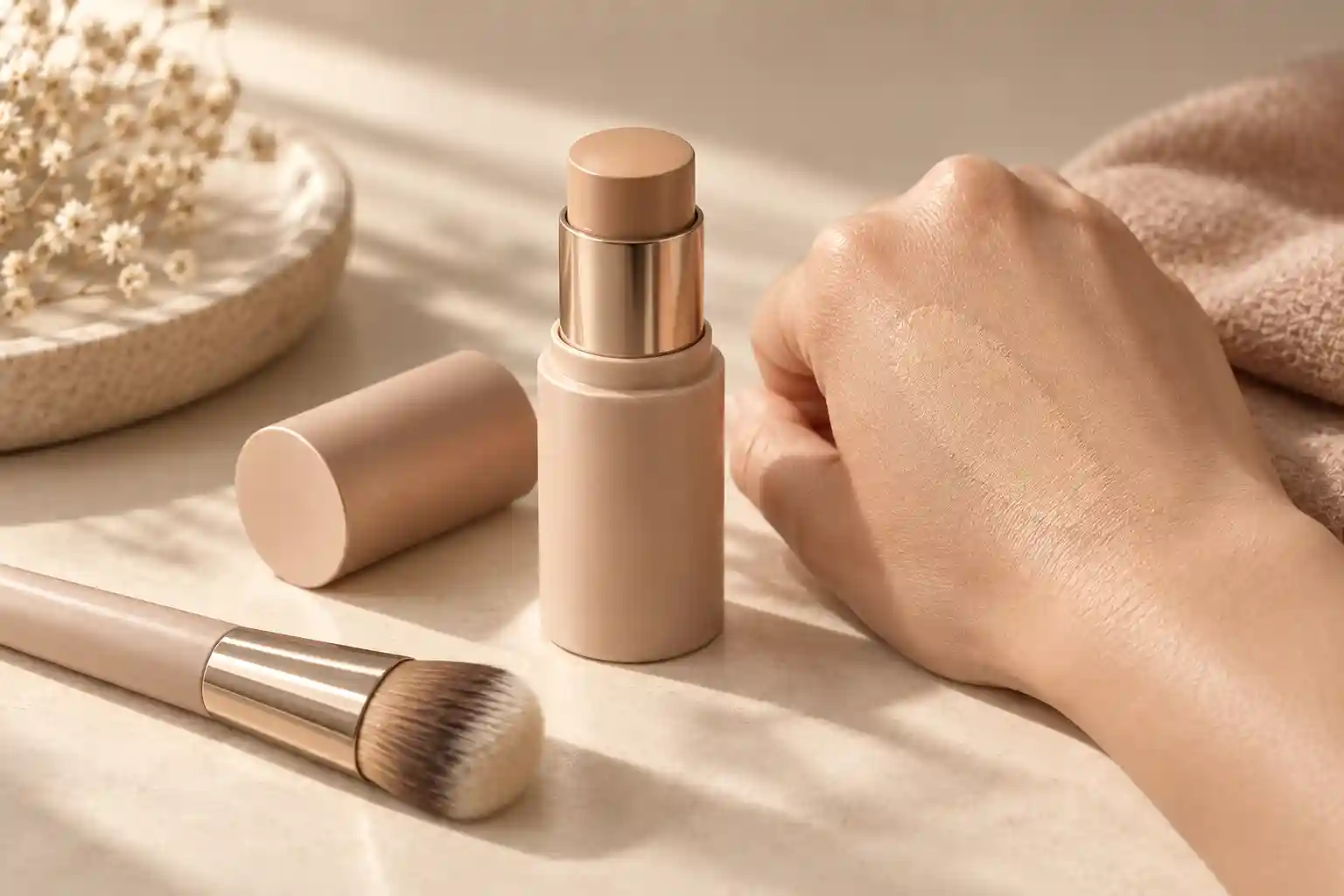
What it is
Mature skin generally means skin that has lost some collagen and natural oil production over time, which changes how it holds makeup, where fine lines and texture show up, and which finishes look flattering versus aging. None of this is about needing "less" makeup - it's about different priorities than skin with more natural elasticity and oil.
How it works
Fine lines and looser skin texture catch product differently than smoother, tauter skin - heavy or matte formulas that would sit flat on younger skin can settle into lines and emphasize them on mature skin instead. Lower natural oil production also means mature skin behaves more like dry skin in terms of what it needs from a base, even for people who had oily skin earlier in life.
How to choose
- Prioritize hydration in every step, from skin prep through to finish - see Skin Prep.
- Lean toward satin or dewy finishes over flat matte, which reflects light and softens the look of fine lines rather than sitting flat in them - see Matte vs. Dewy Finish.
- Choose lighter, buildable coverage over heavy full-coverage formulas. Heavy formulas are more likely to settle into texture; building thin layers where needed gives more control.
- Set minimally and strategically, only where oil control is actually needed, rather than a full-face matte powder set that can look cakey on drier, more textured skin.
- Use cream-based color products - blush, and sometimes bronzer - which blend into mature skin more seamlessly than powder versions.
A full routine for mature skin
- Prep with layered hydration - a hydrating serum, moisturizer, and eye cream - and let it absorb fully before makeup - see Skin Prep.
- Prime only where needed. A hydrating primer helps all over; a smoothing or blurring primer can go on visible pores.
- Keep the base light and pressed in. Dot foundation where you need coverage and press it in with a damp sponge, rather than covering the whole face evenly - see Foundation.
- Use a thin, hydrating concealer only on the darkest areas, rather than a large triangle under the eyes - see Why does concealer crease under the eyes?.
- Place cream blush a little higher on the cheek and blend it up toward the temple, which gives a lifting effect - see Blush.
- Powder minimally, with a finely milled powder on the T-zone only.
- Fill brows softly in a shade close to your natural hair, using tinted gel to blend in any gray hairs - see Brow Shaping.
- Keep eye makeup soft and smooth. Use an eyeshadow primer, matte and satin shades with fine shimmer only on the center of the lid, liner kept close to the lashes or tightlined, and curled lashes with mascara - see Eyeshadow and Winged Liner.
- Line the lips before color to stop it bleeding into fine lines, then use a creamy or satin lipstick rather than a very dry matte one - see Lip Lining.
- Finish with a hydrating setting spray to melt everything together.
Common mistakes
- Applying too much product trying to achieve full coverage, which settles into fine lines and emphasizes texture rather than smoothing it.
- Using the same matte, oil-controlling formulas that worked at a younger age, on skin that now behaves more like a dry skin type.
- Skipping color products out of a mistaken idea that "less is more" applies to everything - a bit of warmth from blush and a light touch of highlighter generally look more youthful than a completely flat, colorless base.
- Over-powdering the under-eye and around the mouth, two areas where fine lines make cakiness especially visible.