Highlighter
A light-reflecting product applied to the high points of the face to mimic where light naturally catches skin.
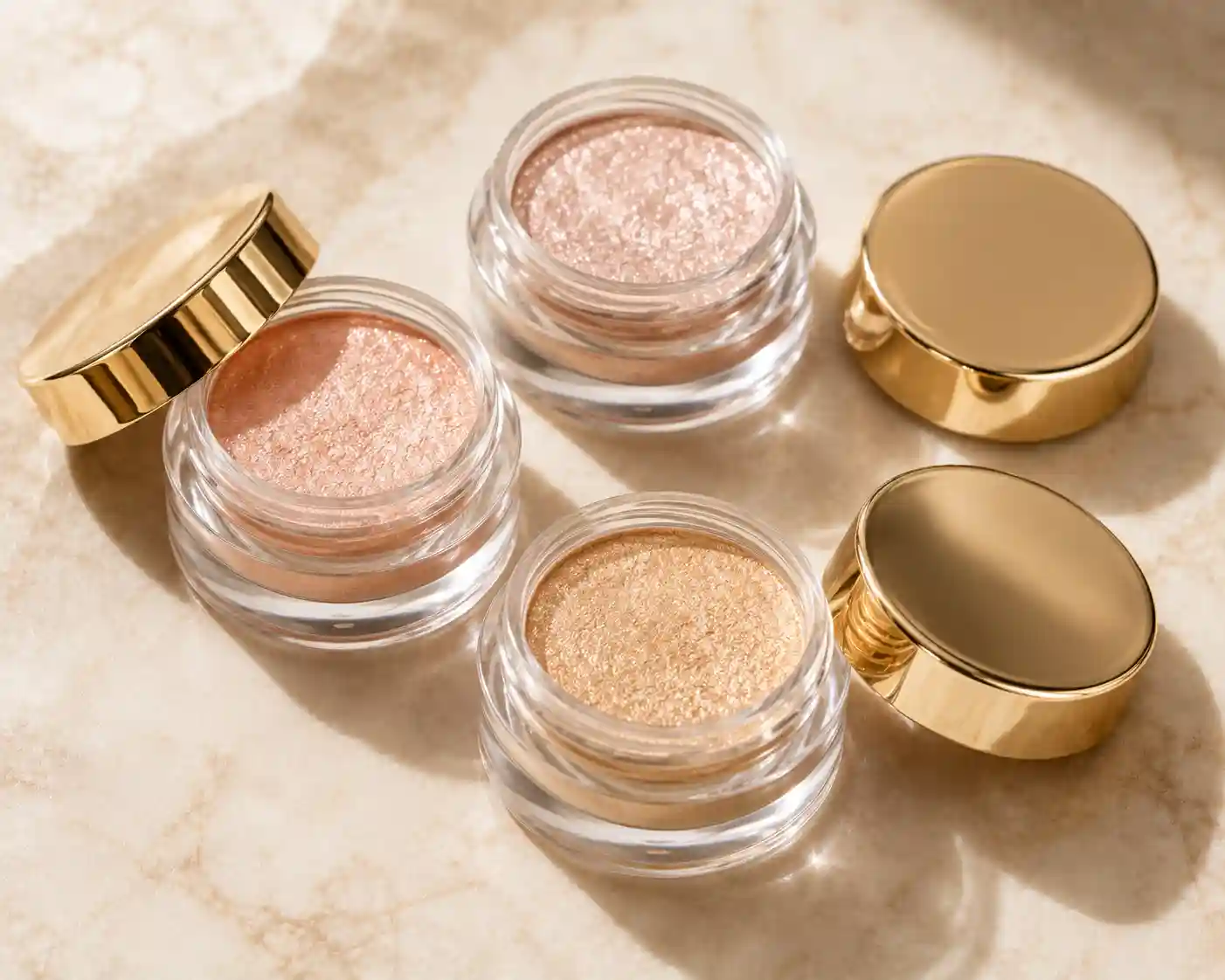
What it is
Highlighter is a finely milled, light-reflecting product placed on the highest points of the face - cheekbones, brow bone, bridge of the nose, cupid's bow - to exaggerate where natural light would already catch the skin. It's the counterpart to contour, and the two are usually discussed together, but highlighter can be worn entirely on its own for a subtle glow.
How it works
Reflective particles (usually mica or synthetic pearl pigments) bounce light back off the skin's surface, which reads visually as a raised, lit area even though the skin underneath hasn't changed shape. Finer, more finely milled particles give a soft, natural sheen; larger, coarser particles give a more visible sparkle or foil-like finish.
How to choose one
- Fine, subtle shimmer suits daily wear and photographs more naturally.
- Coarser, high-shine formulas suit occasions where more visible glow is the point, but can emphasize texture and pores under strong light.
- Powder highlighter is easier to control and layer; cream or liquid highlighter melts into skin for a more lit-from-within look but is less forgiving to reapply.
- Cool-toned (silver/pink) highlighters tend to suit cooler undertones; warm-toned (gold/champagne) highlighters tend to suit warmer undertones.
Common mistakes
- Applying highlighter with a heavy hand on textured or acne-prone skin, which draws light to exactly the areas most people want to draw attention away from.
- Placing it everywhere instead of only the true high points, which flattens the effect instead of sculpting it.
- Skipping a matte base nearby - highlighter reads most clearly against surrounding matte skin, not next to other shine.