Matte vs. Dewy Finish
Matte and dewy finishes come from different formula choices and suit different skin types and occasions.
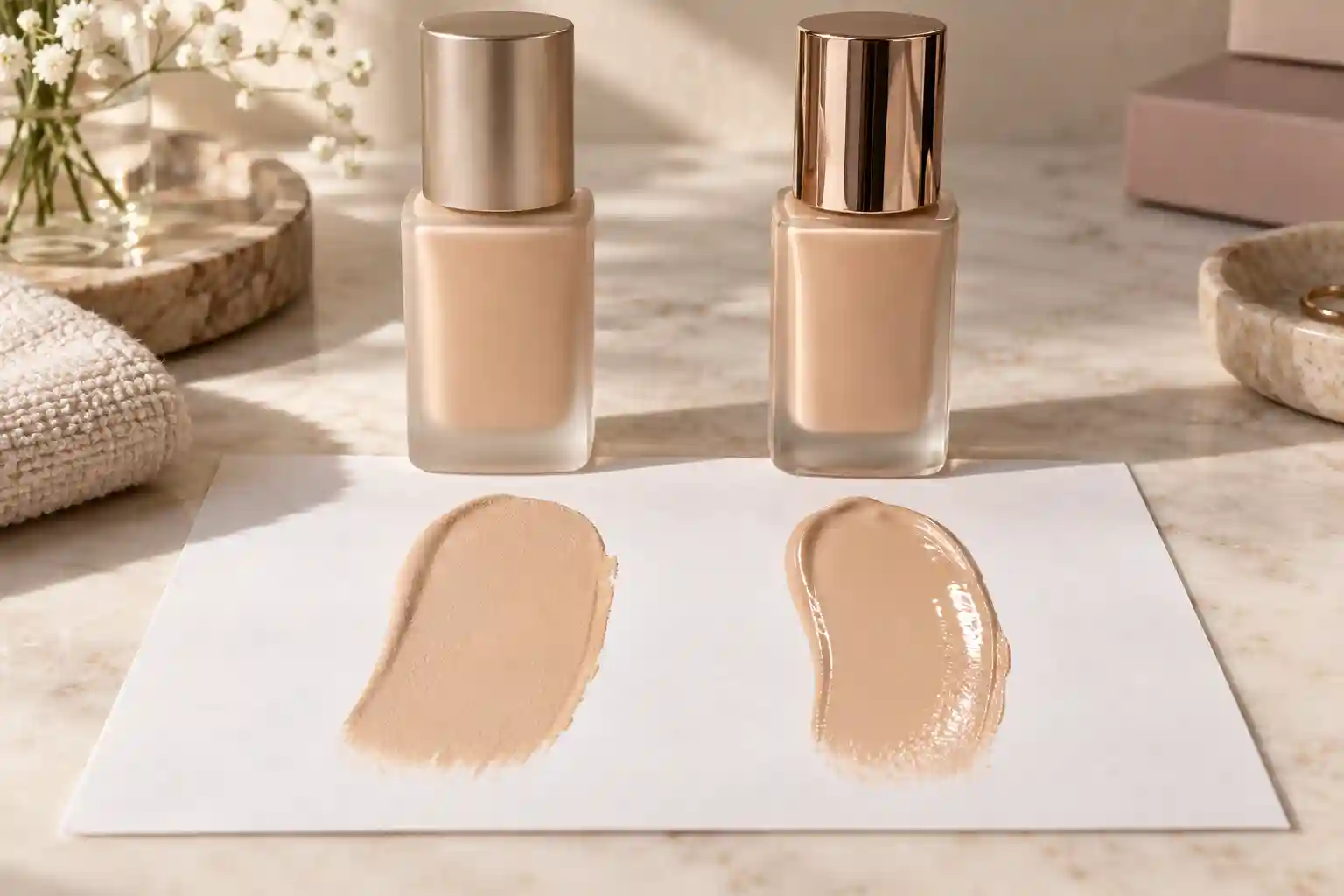
Finish - how light interacts with the surface of the makeup - has as much impact on the overall look as shade or coverage does, and matte and dewy sit at opposite ends of that spectrum.
Matte finish
A matte finish absorbs light rather than reflecting it, giving a flat, shine-free look. It's generally the more forgiving option on oily skin, since it resists looking shiny as oil builds up through the day, and it photographs more predictably under strong or flash lighting. Taken too far - heavy matte foundation plus heavy matte powder - it can look flat or emphasize dry patches and fine lines, since there's no light bouncing off the skin to soften texture.
Dewy finish
A dewy finish reflects light, mimicking naturally hydrated, healthy-looking skin. It tends to look more youthful and soft, and it's generally more flattering on drier skin, which can look dull or flat under a full matte routine. It shows texture, pores, and oil breakthrough more readily than matte does, so it needs more oil control underneath to hold up on oilier skin types, and it's less predictable under strong flash photography, where reflective areas can blow out.
Bottom line
Matte suits oilier skin, long wear, and situations with strong or flash lighting; dewy suits drier or more mature skin and softer, more natural-looking daytime looks. Finish isn't only about foundation - powder, blush, and highlighter formulas all carry their own finish too, and mixing them (a dewy highlighter on an otherwise matte base, for example) is a common way to get definition without committing the whole face to one extreme.