Lip Lining
Using lip liner to define, extend the wear of, or subtly reshape the appearance of the lips.
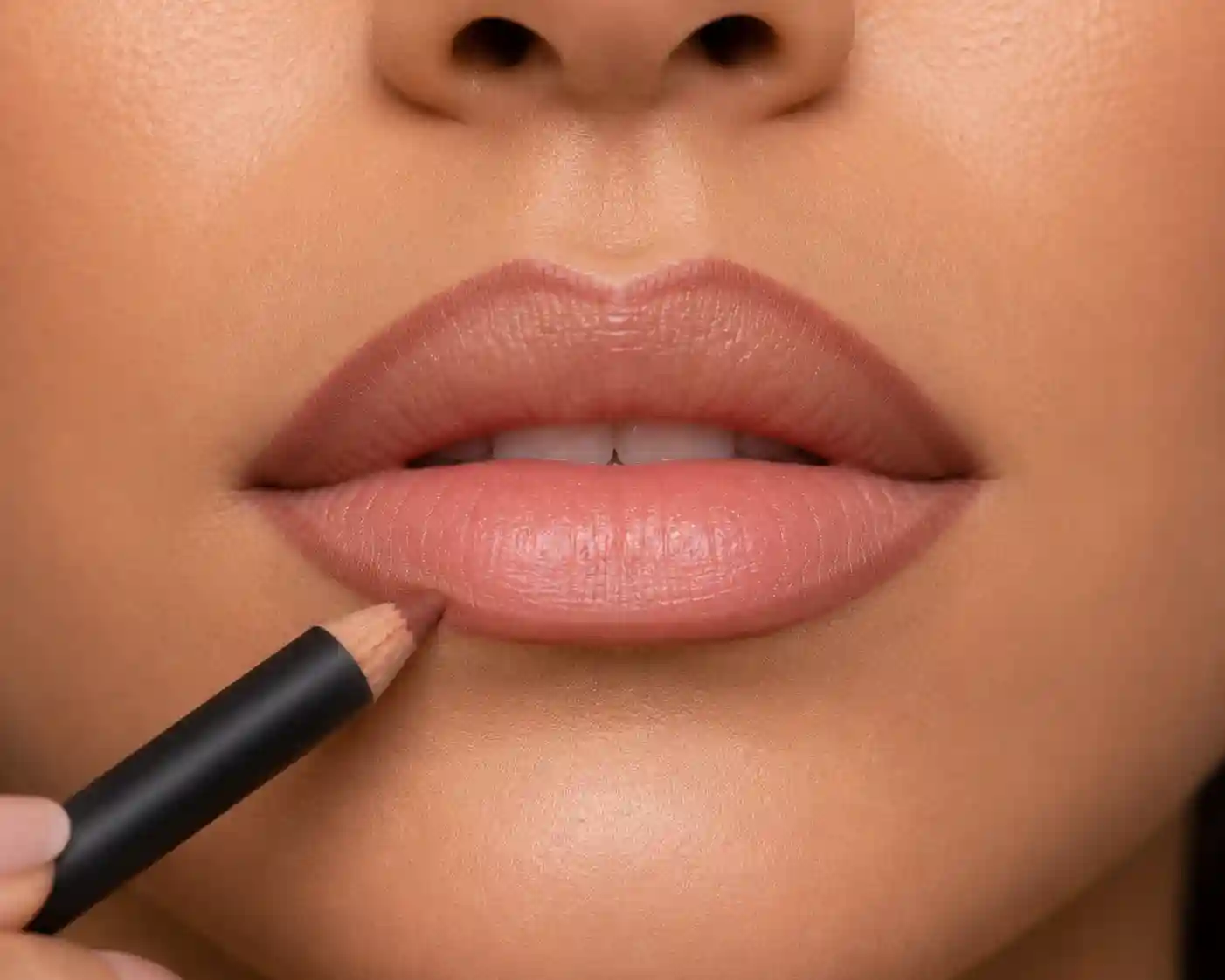
What it is
Lip lining is tracing the edge of the lips with liner before applying lipstick or gloss, primarily to extend wear time by preventing color from feathering into fine lines, and secondarily to define or subtly adjust the visible shape of the lips.
How it works
A firm liner deposits a drier, more texture-gripping layer along the lip's edge than lipstick alone would leave, creating a barrier that softer lipstick formulas don't easily cross. Because it's applied precisely along (or very slightly outside) the natural lip line, it can also make the lips look marginally fuller or more defined - but only within a small margin; drawing far outside the natural line looks convincing at a glance but reads as obviously mismatched up close or in photos.
How to do it
- Start at the cupid's bow, tracing the natural peaks first since they're the easiest reference points to get right.
- Follow the natural lip line closely, staying within a millimeter or two outside it if adjusting shape slightly.
- Fill in the rest of the lip with the same liner before applying lipstick, which extends wear time evenly rather than just at the edge.
- Apply lipstick or gloss on top, blending the inner edge of the liner into the lipstick with a small brush if a hard line is visible.
Common mistakes
- Overdrawing significantly outside the natural lip line, which looks obvious in daylight or photos even if it reads fine in a quick mirror check.
- Lining only the outer edge and skipping the fill step, losing most of the wear-extending benefit liner offers.
- Using a liner shade that clashes noticeably with the lipstick going over it, unless a visible two-tone effect is the intended look.