Foundation and Base Products for Oily Skin
What to look for in base products, and what to skip, when skin produces enough oil to break makeup down over the day.
What it is
Oily skin produces more sebum than average, generally concentrated in the T-zone, which affects how base makeup wears more than almost any other skin factor. The right products don't stop oil production - nothing applied on top of skin does - but they slow how quickly it breaks makeup down.
How it works
Oil sitting on top of makeup changes how light reflects off the surface, which is what causes a matte look to turn shiny and a base product to look patchy or shift color by afternoon. Formulas built for oily skin generally use oil-free or lightweight silicone bases, sometimes with mattifying or oil-absorbing ingredients mixed in, so there's less for surface oil to visibly disrupt.
How to choose
- Start with a mattifying or oil-control primer, focused on the T-zone rather than the whole face - see Primer.
- Choose oil-free, matte, or long-wear labeled foundation formulas. These are built to resist the oil breakthrough that dulls or shifts other formulas - see Liquid vs. Powder Foundation for how the two formats hold up differently on oilier skin.
- Set thoroughly with powder, particularly through the T-zone, rather than skipping it to avoid a "heavy" feeling - unset base is the most common reason oily skin doesn't hold up.
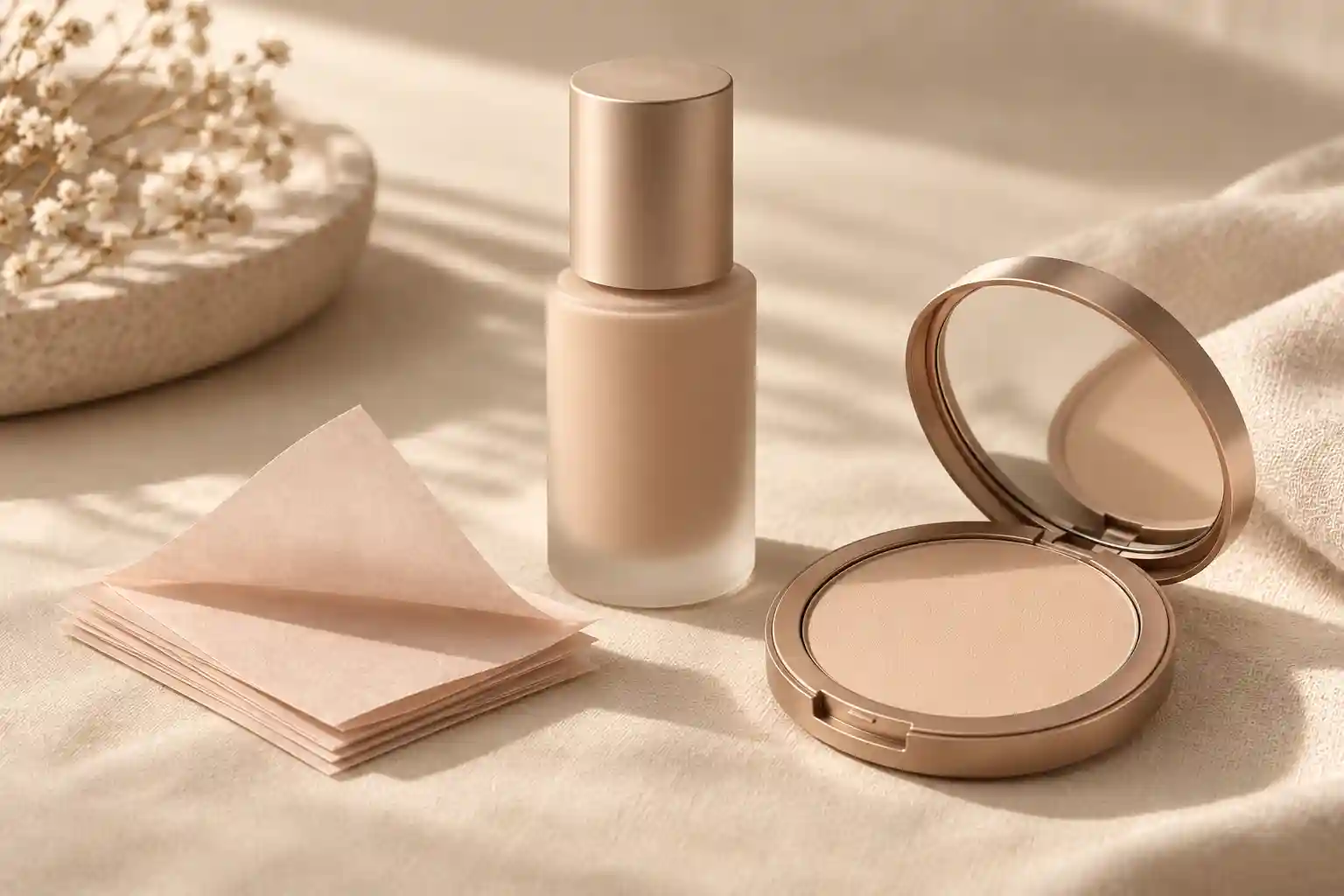
- Carry blotting sheets, not more powder, for midday oil. Blotting removes oil without adding product on top of what's already there.
- Avoid very dewy or hydrating formulas as an everyday default, even if they look appealing in isolation - they generally break down fastest on oilier skin.
Common mistakes
- Skipping primer and moisturizer entirely to avoid feeling greasy - under-hydrated skin can actually produce more oil to compensate, making the problem worse.
- Reapplying powder throughout the day directly over oil-soaked old powder instead of blotting first.
- Choosing a foundation shade based on how it looks fresh, without accounting for how it will oxidize and shift once oil builds up - see Why does foundation oxidize and turn orange?.
- Over-matifying to the point of looking flat - some balance of matte base with a touch of strategic highlighter usually looks more natural than fully flat matte everywhere.