Liquid vs. Powder Foundation
How liquid and powder foundation differ in coverage, finish, and which skin types each tends to suit best.
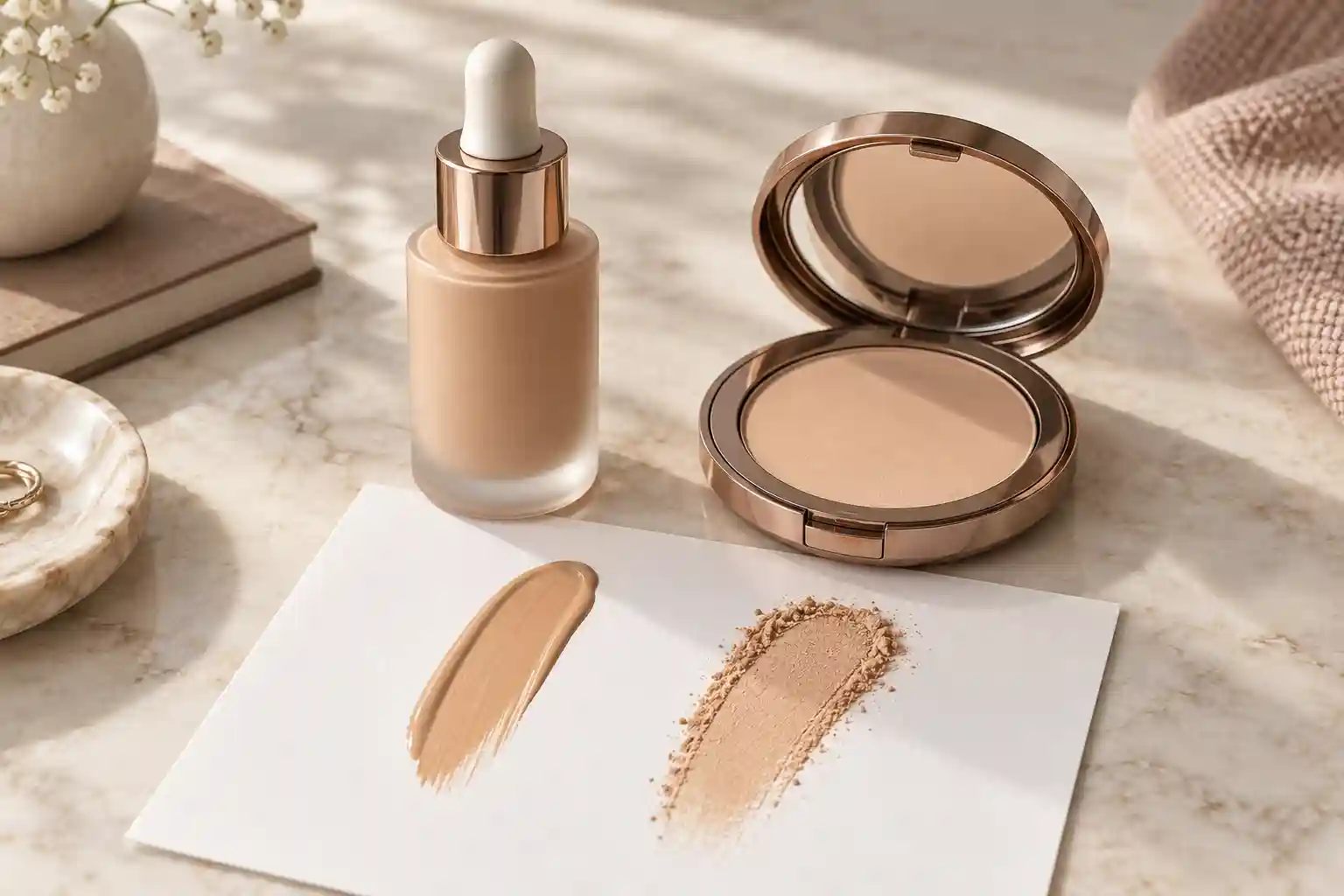
Both are meant to do the same job - even out skin tone and texture - but they get there through very different formulas, and that difference shows up in how each wears through the day.
Liquid foundation
Liquid foundation suspends pigment in a water, oil, or silicone base, which makes it easy to build coverage gradually and blend with a range of tools - fingers, brush, or sponge. It tends to give a more natural-looking, skin-like finish, and formulas range from very sheer to full coverage. The tradeoff is that liquid formulas are more prone to visible oxidization and oil breakthrough over the course of the day, and reapplying over existing makeup mid-day is messier than with powder.
Powder foundation
Powder foundation is pressed pigment applied with a brush, sponge, or puff. It sets skin to a more matte finish immediately, is faster to apply, and is the easiest formula to touch up during the day since it can go straight over existing makeup without disturbing it. It generally reads as less "skin-like" than liquid, can emphasize dry or flaky texture rather than hiding it, and tops out at a lower maximum coverage than heavier liquid formulas.
Bottom line
Liquid foundation suits people who want a more natural, buildable finish and don't mind a slightly more involved application; powder suits people who want speed, easy touch-ups, and a more matte result, especially on oilier skin. Neither is strictly "better" - the right choice depends more on skin type and how much of the day the makeup needs to hold up unattended than on coverage level alone. Many routines also use both: liquid as the base, powder to set and extend it.