Why does powder look cakey or ashy?
Cakey or ashy powder is usually a case of too much product, the wrong shade, or powder applied over skin that wasn't ready for it.
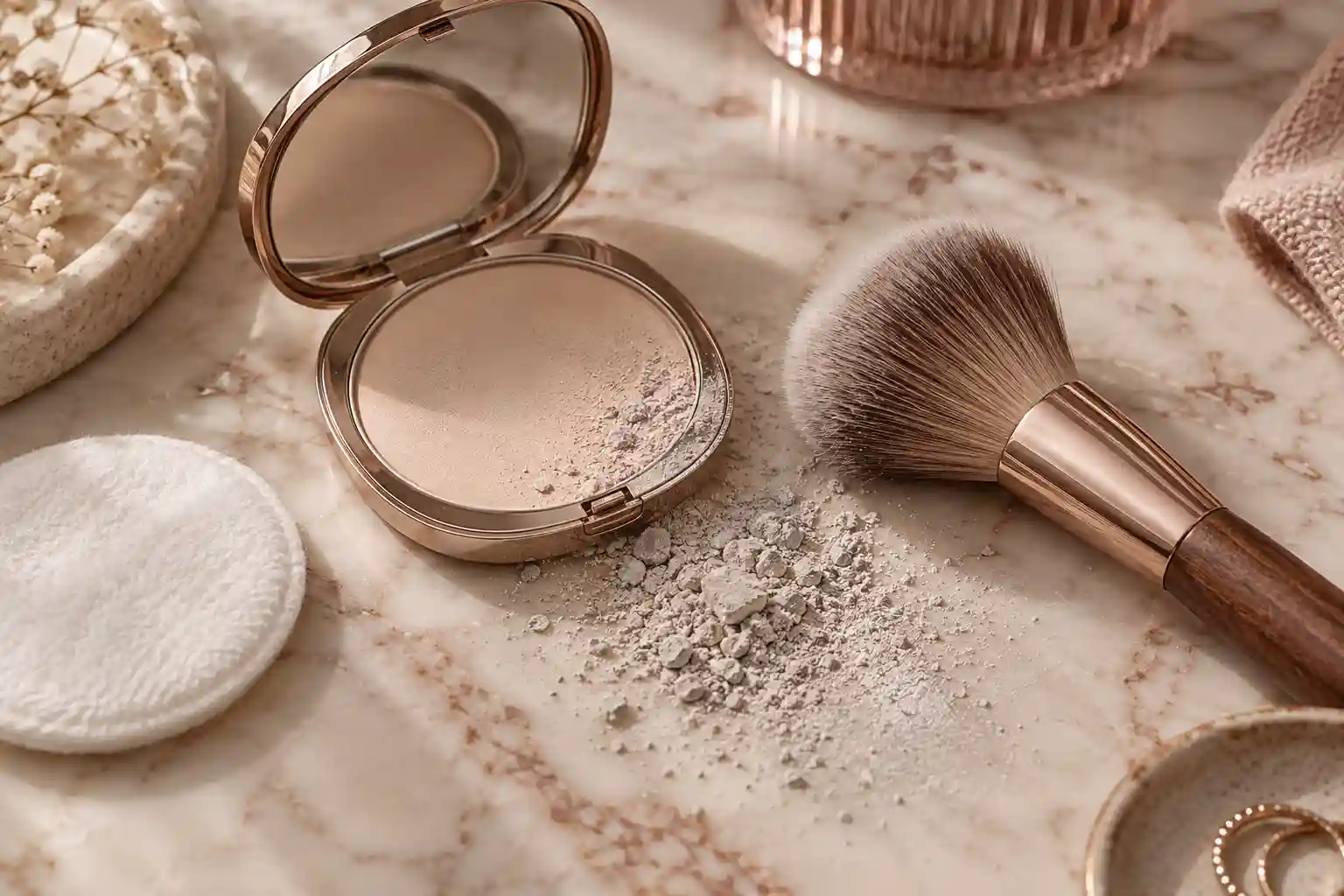
Short answer
A cakey look is powder sitting visibly on top of the skin rather than blending into it - flat, heavy, and texture-emphasizing. An ashy look is a related but separate problem: the powder itself is casting a gray or chalky tone, usually because it doesn't match the skin underneath.
Why it happens
Cakiness is mostly a quantity and layering problem - too much powder, applied all at once, or powder reapplied throughout the day directly over old product without removing oil first, builds up visible texture. Ashiness happens when a translucent powder isn't actually undertone-neutral for a given skin tone, or when a tinted powder is a shade or two off; both leave a visible cast, especially in photos with flash.
How to prevent or fix it
- Apply with a brush, in thin layers, pressed rather than swept. A fluffy powder brush pressing product in builds coverage more evenly than a puff dragging it across the face.
- Only powder where needed. Setting the whole face heavily "just in case" is the most common cause of cakiness - target the T-zone and under-eyes rather than blanketing everything.
- Blot oil before reapplying midday. Pressing a blotting sheet on oily areas first, then adding a light dusting of powder, avoids stacking fresh powder onto oil-soaked old powder.
- Test translucent powder under real light. Some "translucent" powders aren't neutral on every skin tone - check for ashiness in daylight and under flash before committing to one as a go-to.
- Size the tool to the job. A large fluffy brush for all-over setting and a smaller one for precise areas like under the eyes gives more control than one brush for everything. See Powder Brush.