Primer
A pre-makeup base layer that smooths texture, controls oil, or extends the wear of what's applied over it.
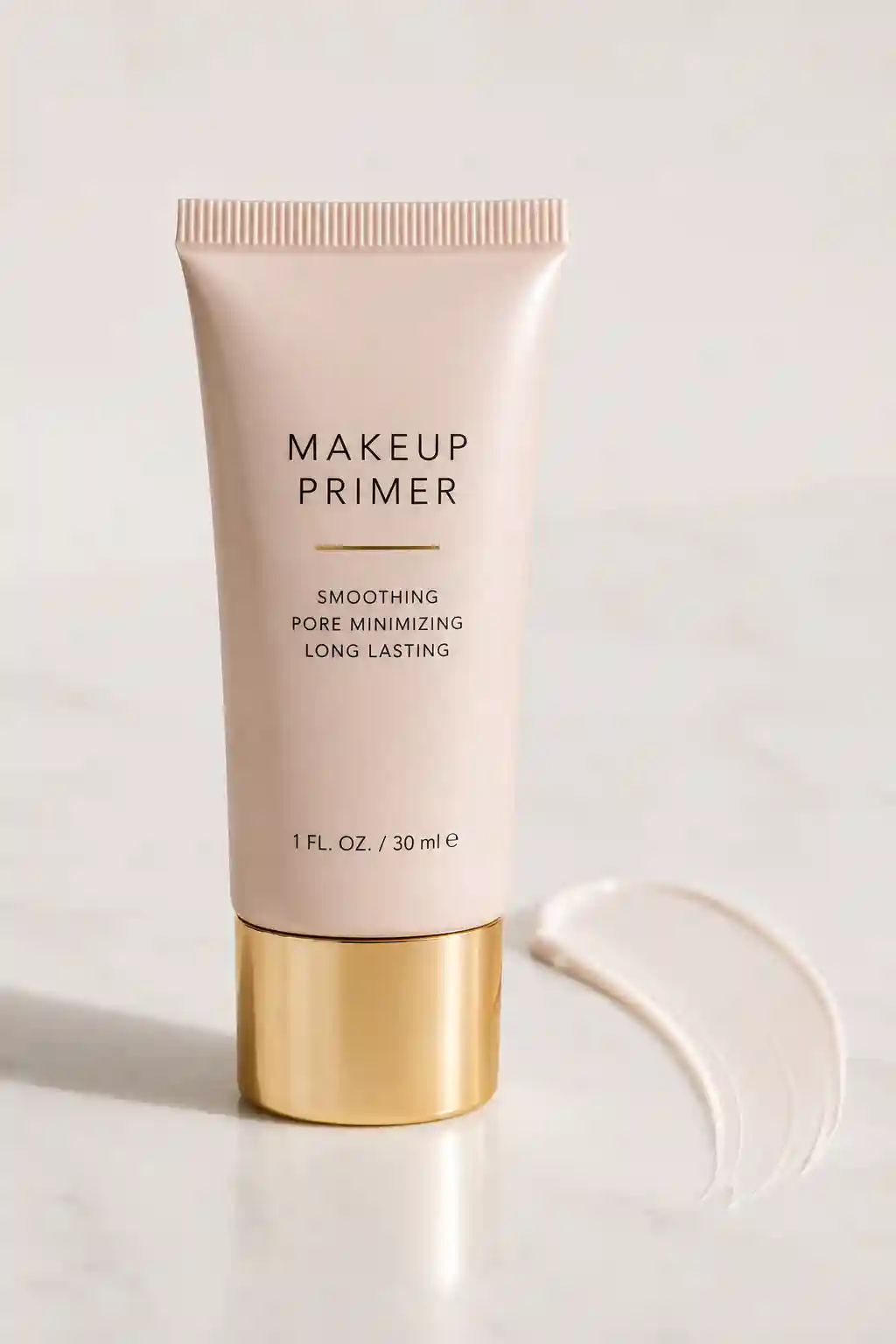
What it is
Primer is applied after skincare and before foundation to prepare the skin's surface - smoothing texture, filling pores, controlling oil, or adding hydration - so that whatever goes on top applies more evenly and lasts longer. Different primers are built to solve different problems, which is why "primer" isn't really one product category so much as several sharing a spot in the routine.
How it works
Silicone-based primers (often described as "blurring") fill in fine lines and pores with a smooth, semi-solid film that foundation glides over rather than sinking into. Hydrating primers add water- or oil-based moisture for dry skin so foundation doesn't cling to dry patches. Mattifying primers use oil-absorbing ingredients like silica to control shine through the day. Color-correcting primers use tinted pigment (green, purple, peach) the same way concealer correctors do, to neutralize redness or dullness before foundation.
How to choose one
- Match the primer to the specific problem, not to "primer" as a generic step - a mattifying primer on already-dry skin can make texture worse, not better.
- Silicone-based primers and water-based foundations don't always blend smoothly together - checking formula compatibility avoids a pilling, ball-up texture on application.
- Primer isn't mandatory. Skin that's already well-prepped and a foundation that already wears well may not need an extra step.
Common mistakes
- Applying too much, which can make foundation slide rather than grip.
- Using a blurring, silicone-based primer under a foundation that isn't silicone-based, which is the most common cause of pilling.
- Treating primer as a substitute for basic skin prep like moisturizing dry skin first - primer smooths what's already there, it doesn't fix dehydration on its own.