Why do eyebrows look too harsh or drawn-on?
Harsh brows are usually a product-and-motion problem - pencil overused as the whole fill, or product with no soft transition at the edges.
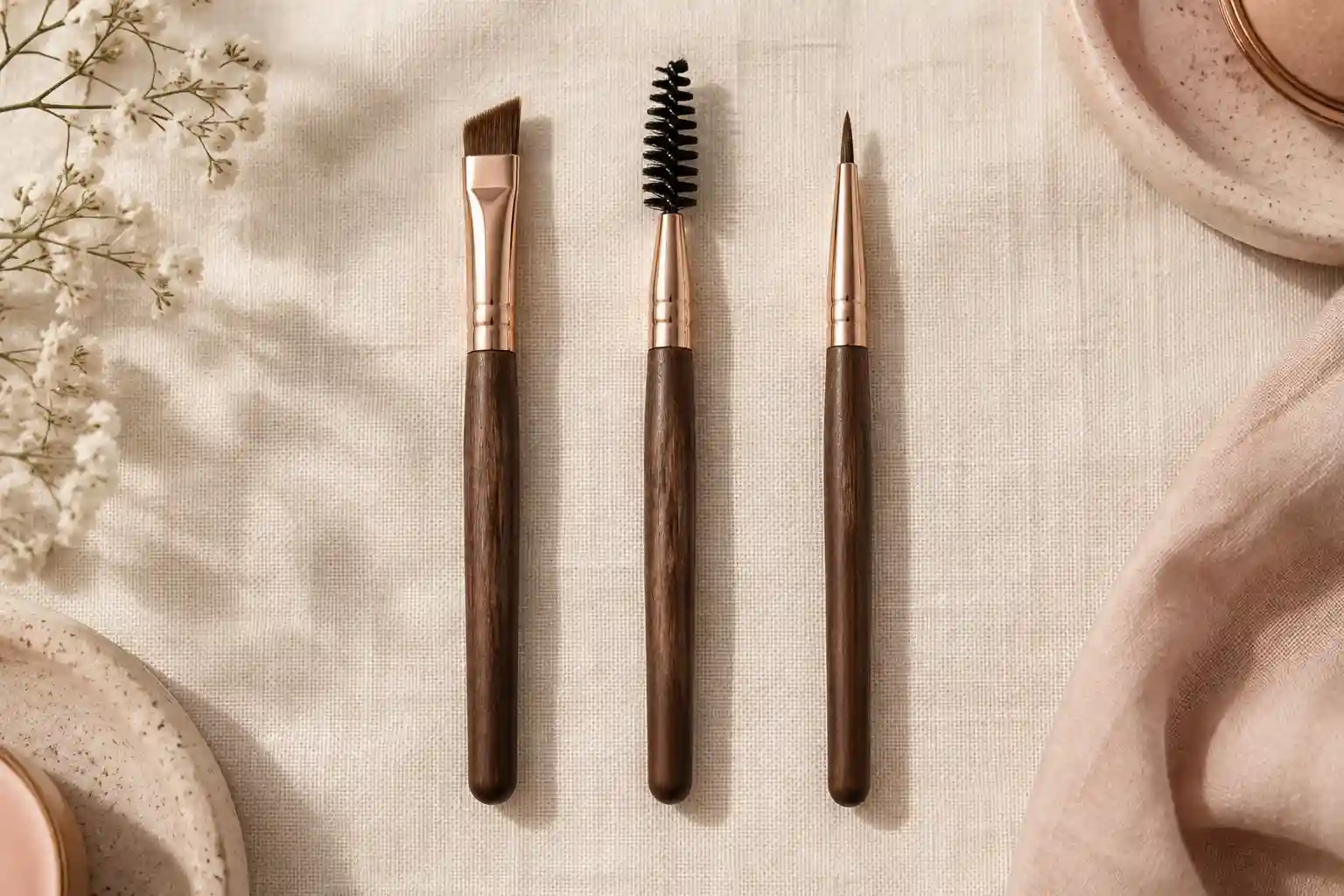
Short answer
Harsh, "drawn-on" brows happen when brow product creates a solid, uniform shape with a hard outer edge instead of mimicking the uneven density of real hair. It's a very common result of using pencil alone, applied heavily, without any softening.
Why it happens
Real eyebrows are denser in some areas and sparser in others, with individual hairs visible at the edges rather than a solid block of color. A pencil used to fully fill the brow in solid strokes ignores that natural variation, and a strong, dark product with no lighter transition at the tail or a defined outer edge with nothing softening it will both read as obviously drawn rather than natural.
How to prevent or fix it
- Use hair-like strokes, not a solid fill. Short, flicking strokes that follow the direction of natural hair growth mimic individual hairs instead of blocking in a shape. See Brow Shaping.
- Fill the sparse areas more than the naturally dense ones. Brows are already darkest where hair is thickest - adding heavy product there on top of existing density is what tips into "drawn-on."
- Choose a shade close to natural hair color, not darker. A shade one or two tones lighter than the darkest brow hairs generally looks more natural than an exact match or anything darker.
- Soften the front of the brow, keep the tail more defined. A harder edge works at the brow tail, where real brows also taper to a point, but the front should stay soft rather than blocked in.
- Set with a clear or tinted brow gel. Brushing brows into place after filling blends pencil strokes into the surrounding natural hair rather than leaving them sitting as separate lines.