Tweezers
A precision hand tool used to remove individual brow or facial hairs at the root.
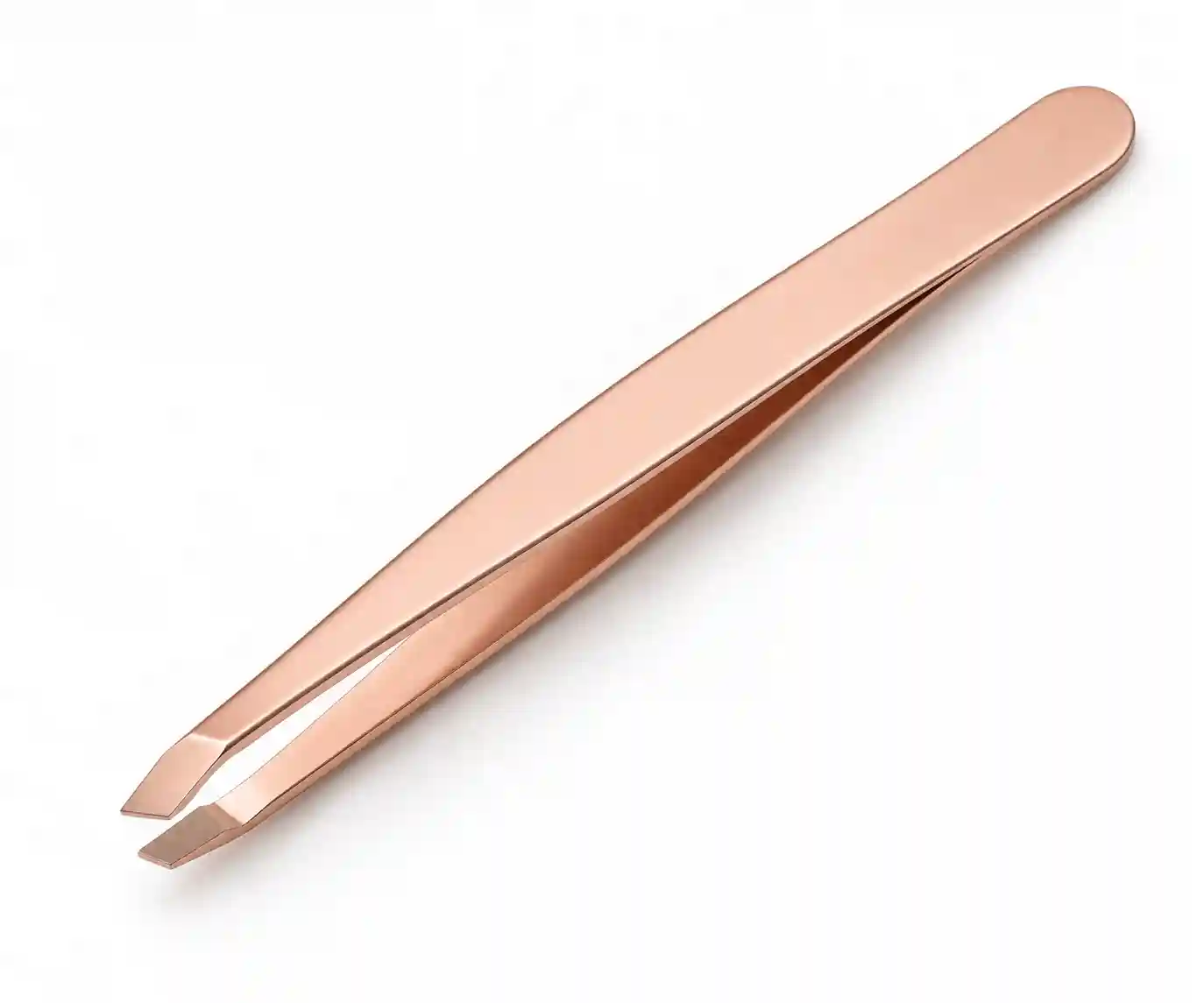
What it is
Tweezers are a simple mechanical tool - two spring-tensioned arms meeting at a tip - used to grip and pull individual hairs out at the root, most commonly for shaping eyebrows but also for other small facial or stray hairs. Unlike trimming, removal at the root means regrowth takes longer to become visible.
How it works
Removing hair at the root, rather than cutting it at the surface, delays regrowth because the follicle has to cycle back into an active growth phase before a new hair reaches the surface. Repeated removal from the same follicle over time can also cause some hairs to grow back finer or less consistently, which is part of why shaping brows gets easier to maintain the longer it's kept up.
How to choose one
- Slanted-tip tweezers are the most versatile shape, suited to both grabbing single hairs and sweeping through several at a shallow angle.
- Pointed-tip tweezers offer the most precision for ingrown hairs or very fine, stray hairs, but are less forgiving for general shaping.
- Check the tip alignment before buying - the two tips should meet exactly flush; misaligned tips slip past hairs instead of gripping them.
How to use it
- Map the shape first, in good natural light, after brushing the brows up - see Brow Shaping.
- Tweeze after a warm shower if you can, when hairs tend to come out more easily and with less discomfort.
- Hold the skin gently taut with your other hand, grip a single hair as close to the root as possible, and pull in the direction it grows with one quick motion.
- Work a few hairs at a time and alternate brows, stepping back from the mirror between rounds to keep both sides even.
Care and when to replace
- Wipe the tips with rubbing alcohol before and after each use.
- Store them with a tip cover, or somewhere they won't be knocked or dropped. A bent tip is the most common reason tweezers stop gripping.
- Replace (or have them professionally sharpened) when the tips no longer meet flush or start slipping off hairs.
Common mistakes
- Removing hairs above the natural brow line to "shape," which is much harder to correct than removing more from below over time.
- Plucking in bright, harsh lighting without checking the shape from a distance, leading to over-thinning that isn't obvious until it's done.
- Using dull or misaligned tweezers, which increases the chance of breaking a hair instead of removing it at the root - breakage causes stubble regrowth much sooner than a clean pull.