Brush Cleaner
A liquid or solid soap formulated to remove product buildup and bacteria from makeup brushes and sponges.
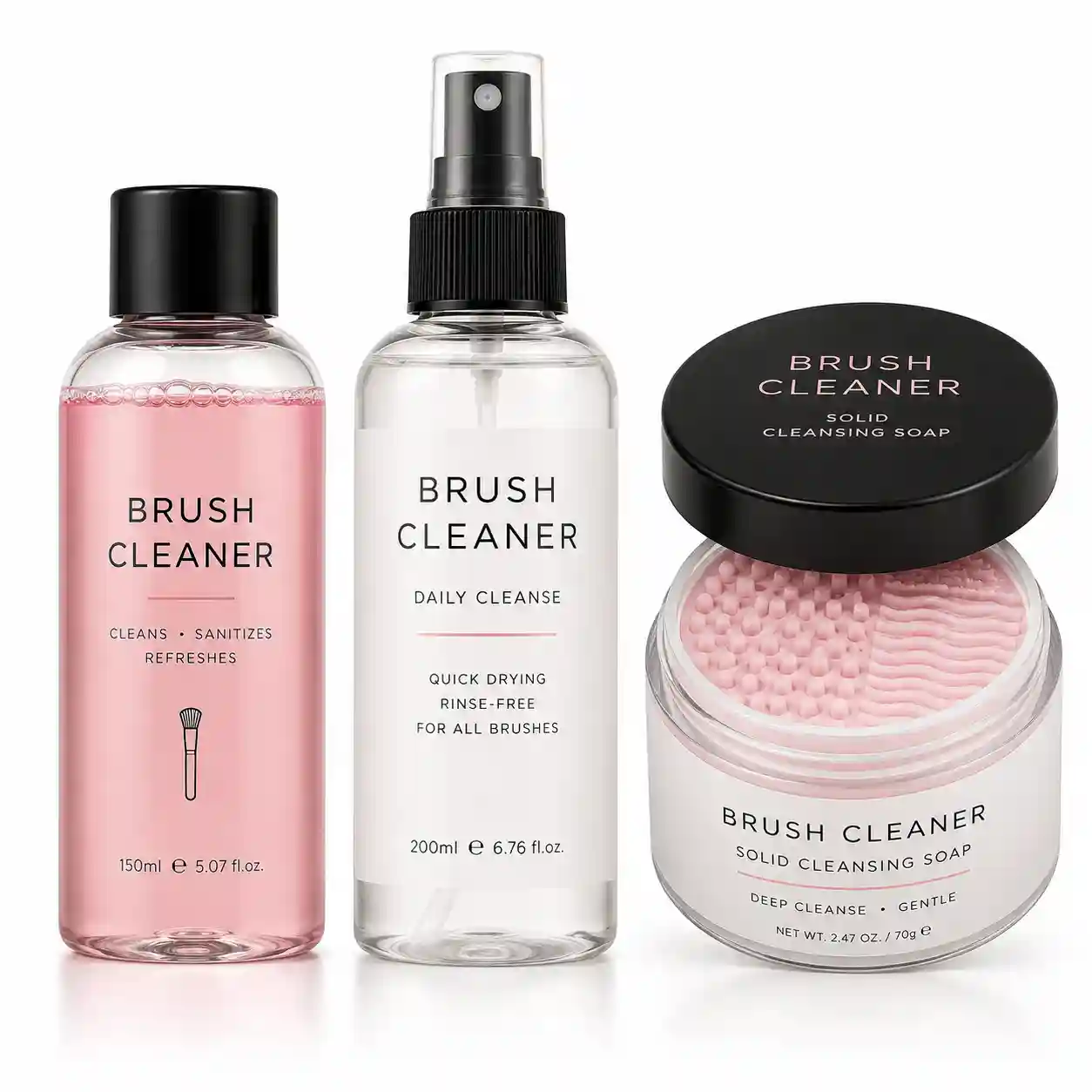
What it is
Brush cleaner is soap formulated specifically for makeup tools - gentle enough to avoid damaging bristles or sponge material with repeated washing, but effective enough to break down oil-based product residue that ordinary hand soap can struggle with.
How it works
Cosmetic residue is often oil- or wax-based, which plain water can't fully lift on its own. Brush cleaners use surfactants to break down that oil (the same basic mechanism as dish soap, but formulated to be gentler on natural hair, synthetic bristles, and sponge material) so product and trapped bacteria rinse away rather than just getting smeared around. See Tools Cleaning & Hygiene for the full washing process.
How to choose one
- Liquid cleansers work well for regular, frequent washing and are fast to use.
- Solid cleansing bars or pads last longer per use and are common for deep-cleaning natural hair brushes.
- Spot-cleaning sprays (quick-drying, no rinse needed) are useful between full washes but aren't a substitute for one - they remove surface product, not deep buildup or bacteria.
How to use it
- Liquid cleanser: wet the brush with lukewarm water, put a small amount of cleanser in your palm or on a textured cleaning pad, and swirl the bristles through it until the lather runs clean.
- Solid bar: wet the brush and swirl it directly on the bar's surface to build a lather, then rinse.
- Spot-cleaning spray: spray the bristles, wipe them back and forth on a tissue until no more color comes off, and let them dry for a few minutes before use.
- Rinse thoroughly after any wash. Cleanser left in the bristles can make them stiff and may irritate skin.
For the full washing and drying process, see Tools Cleaning & Hygiene.
How often to clean
- Foundation and concealer brushes, and sponges collect the most residue - wash them at least weekly. Sponges are best rinsed after every use - see Beauty Blender.
- Powder, blush, and eye brushes can go one to two weeks between full washes, with a spot-cleaning spray in between if you're switching shades.
Common mistakes
- Using regular soap or shampoo not formulated for cosmetic residue, which can be harsher on bristles or less effective at breaking down oil-based product.
- Only spot-cleaning and never doing a full wash, which lets bacteria and product build up at the base of the bristles where a quick spray can't reach.
- Skipping brush cleaning entirely for weeks at a time - buildup changes how a brush picks up and releases product, not just how clean it looks.