Sharpener
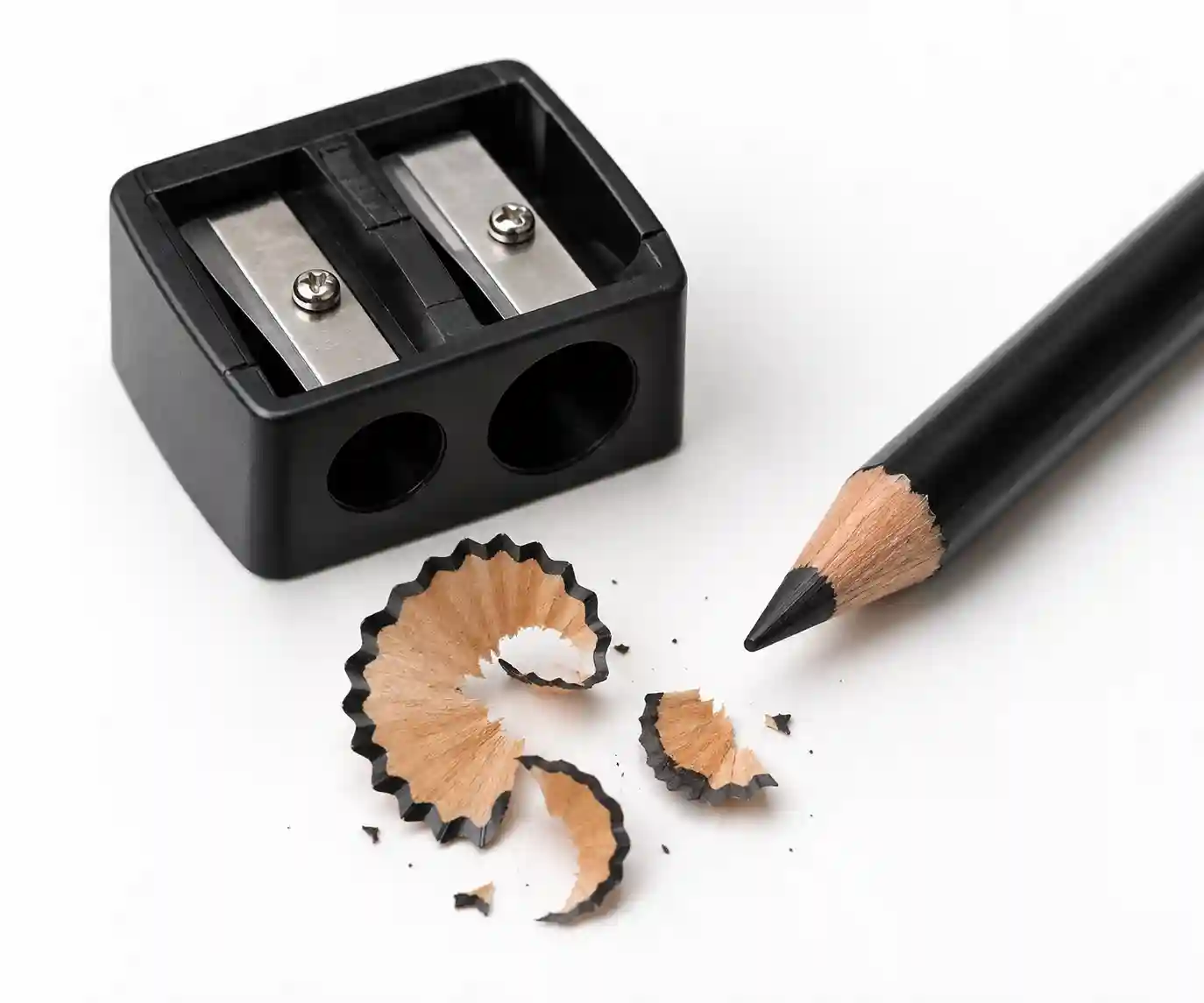
A small tool used to shape and refresh the tip of pencil-format products like liner, lip liner, and brow pencils.
What it is
A cosmetic sharpener works the same way as a stationery pencil sharpener but is sized and shaped for the specific diameters of makeup pencils - liner, lip liner, brow pencil - which are usually wider and softer than a standard writing pencil.
How it works
An angled blade shaves away the outer wood or plastic casing and worn product to expose a fresh tip. Because cosmetic pencils are softer than graphite, a dull or low-quality blade tends to crumble or tug the product instead of cutting it cleanly, which wastes more product per sharpening than a sharp blade would.
How to choose one
- Match the barrel size - many sharpeners include two openings for standard and jumbo pencils, since brow and lip pencils are often a different diameter than eyeliner.
- Metal blades generally outlast and out-cut plastic ones, especially on drier, firmer pencil formulas.
- A built-in shavings catcher keeps sharpening from scattering product residue, useful for travel.
Common mistakes
- Using a dull blade well past its useful life, which wastes far more product per sharpening than replacing the sharpener would cost.
- Sharpening a pencil that's still cold and stiff (e.g., right after storage in a cold room), which can cause the tip to crumble rather than shave cleanly - letting it sit at room temperature first helps.
- Over-sharpening to a fine point on formulas meant to be applied blunt, which changes how the product deposits and can make it harder to control.