Smoky Eye
A layered, heavily blended eyeshadow technique that builds depth through diffused edges rather than sharp lines.
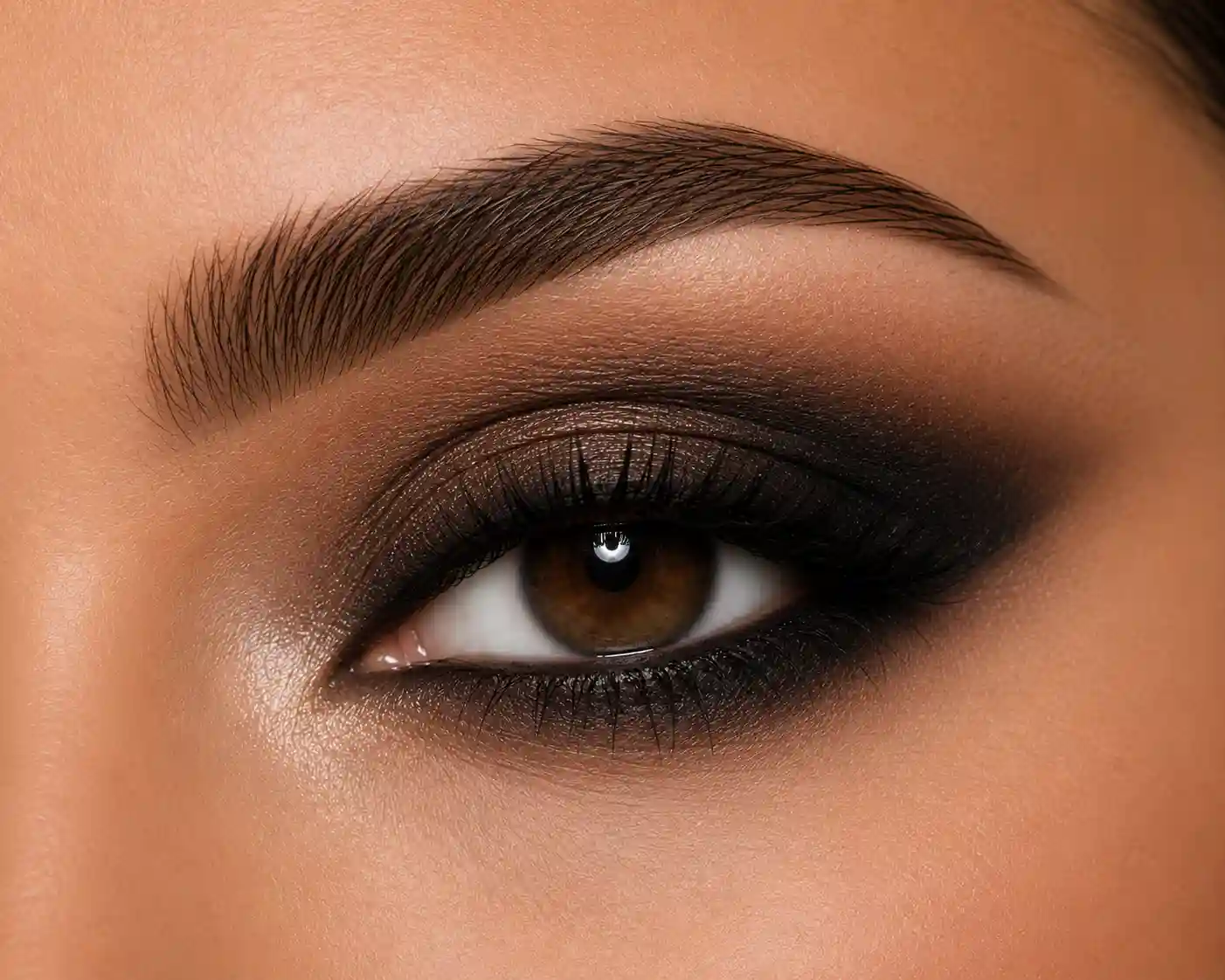
What it is
A smoky eye builds visual depth around the eye through heavily diffused, layered color rather than any single sharp line - the opposite approach from a cut crease, which relies on one crisp edge for definition. It's traditionally dark and dramatic, but the same layering and blending principle works with any color intensity.
How it works
Depth comes from gradually darkening color from the lash line outward and upward, with every edge blended into the next so no single boundary is visible - the "smoke" in the name refers to that lack of hard edges, not necessarily to dark or black color specifically. Because so much of the effect depends on gradual blending rather than placement, a smoky eye is more forgiving of small application mistakes than a technique like cut crease, where one visible hard edge can throw off the whole look.
How to do it
- Apply a base shade across the lid to even out the skin and give every layer after it something consistent to build on.
- Apply the darkest shade to the outer corner and lower lash line first, keeping it concentrated rather than spread thin.
- Work inward and upward with progressively lighter shades, blending at each boundary before adding the next.
- Blend the lower lash line to match, since an unblended lower lid breaks the effect even if the lid itself is well done.
- Add liner and mascara last, keeping liner slightly smudged rather than crisp to stay consistent with the rest of the look.
Common mistakes
- Applying dark color too far up toward the brow bone too early, leaving no room to build depth gradually.
- Under-blending the lower lash line while spending most of the effort on the lid.
- Skipping a base shade, which can leave the final color looking patchy once several dark layers are stacked directly on bare lid.