Cut Crease
An eyeshadow technique that carves a sharp line at the crease to make lid space read as a distinct shape.
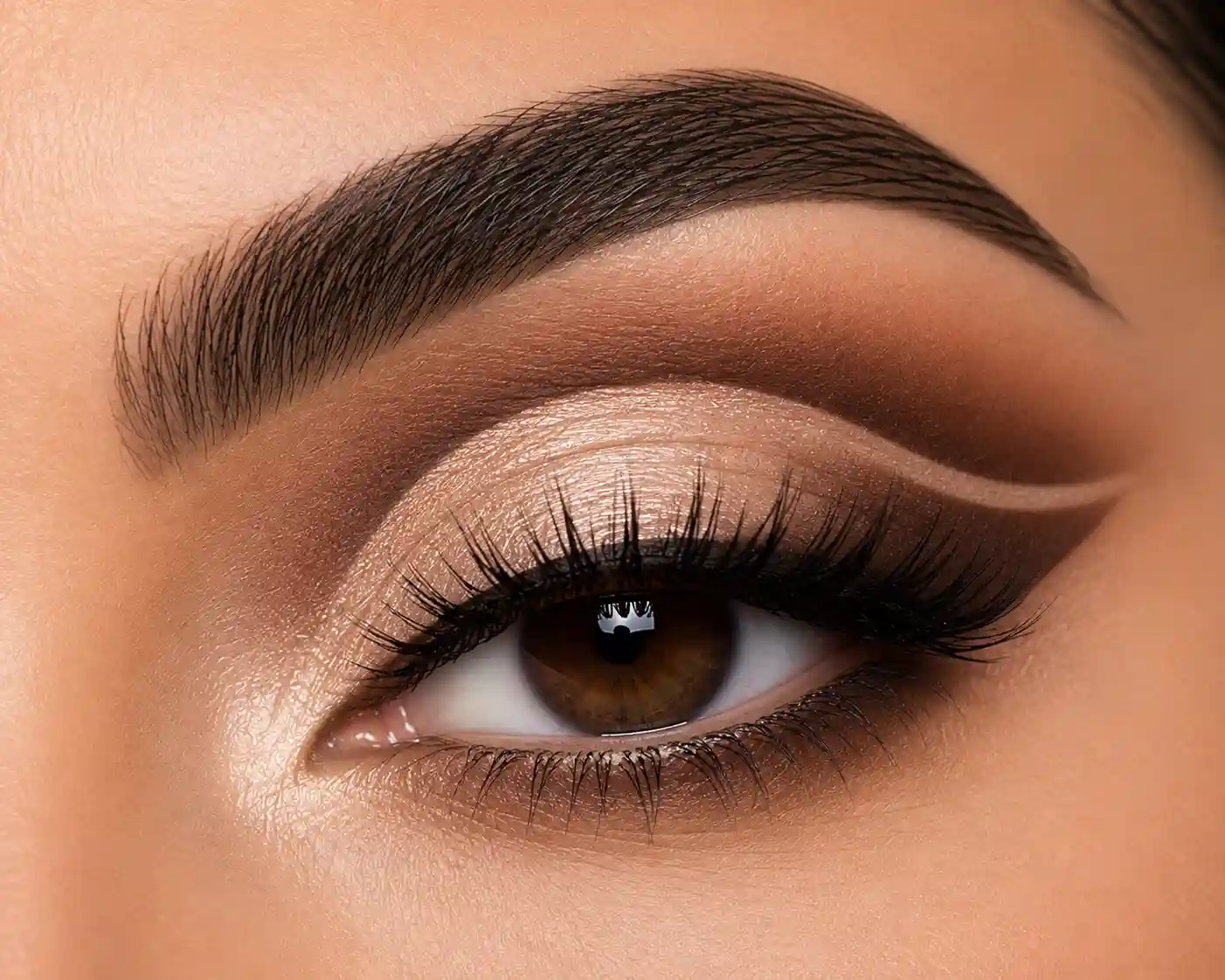
What it is
A cut crease uses a sharply defined line - usually a lighter concealer or skin-toned shade - to separate the eyelid from the crease, instead of the soft, gradual blend most eyeshadow looks use. The "cut" line makes the lid read as its own distinct shape, which is why the technique shows up so often in editorial and performance makeup where definition needs to hold up at a distance.
How it works
A standard blended eye look softens every transition so no edge is visible. A cut crease deliberately keeps one edge crisp: a lighter product (often concealer) is applied along the crease line and blended only upward into the brow bone, not downward into the lid, leaving a hard boundary between the two. The contrast between the sharp edge and the soft blending everywhere else is what creates the shape.
How to do it
- Apply a base eyeshadow shade across the lid as you normally would, blending it softly into the crease.
- Find your natural crease by looking straight ahead in a mirror - this is where the cut line will sit.
- Apply concealer or a light shade precisely along the crease line with a small, firm brush, following the natural curve of the eye.
- Blend the concealer upward only, into the brow bone, keeping the lower edge - the actual "cut" - crisp and untouched.
- Clean up the lid edge with a flat, angled brush and a little concealer if the line needs sharpening further.
Common mistakes
- Blending the cut line on both sides instead of only upward, which softens away the exact edge the technique depends on.
- Using a brush too large or too soft to place the line precisely - a small, dense, flat brush holds a sharper edge than a fluffy one.
- Skipping a base shadow color first, which leaves the lid looking unfinished even once the crease line is sharp.