Why does contour look muddy or patchy?
Muddy contour is usually a shade or blending problem - a warm-toned "bronzer" used as contour, or product left with hard edges.
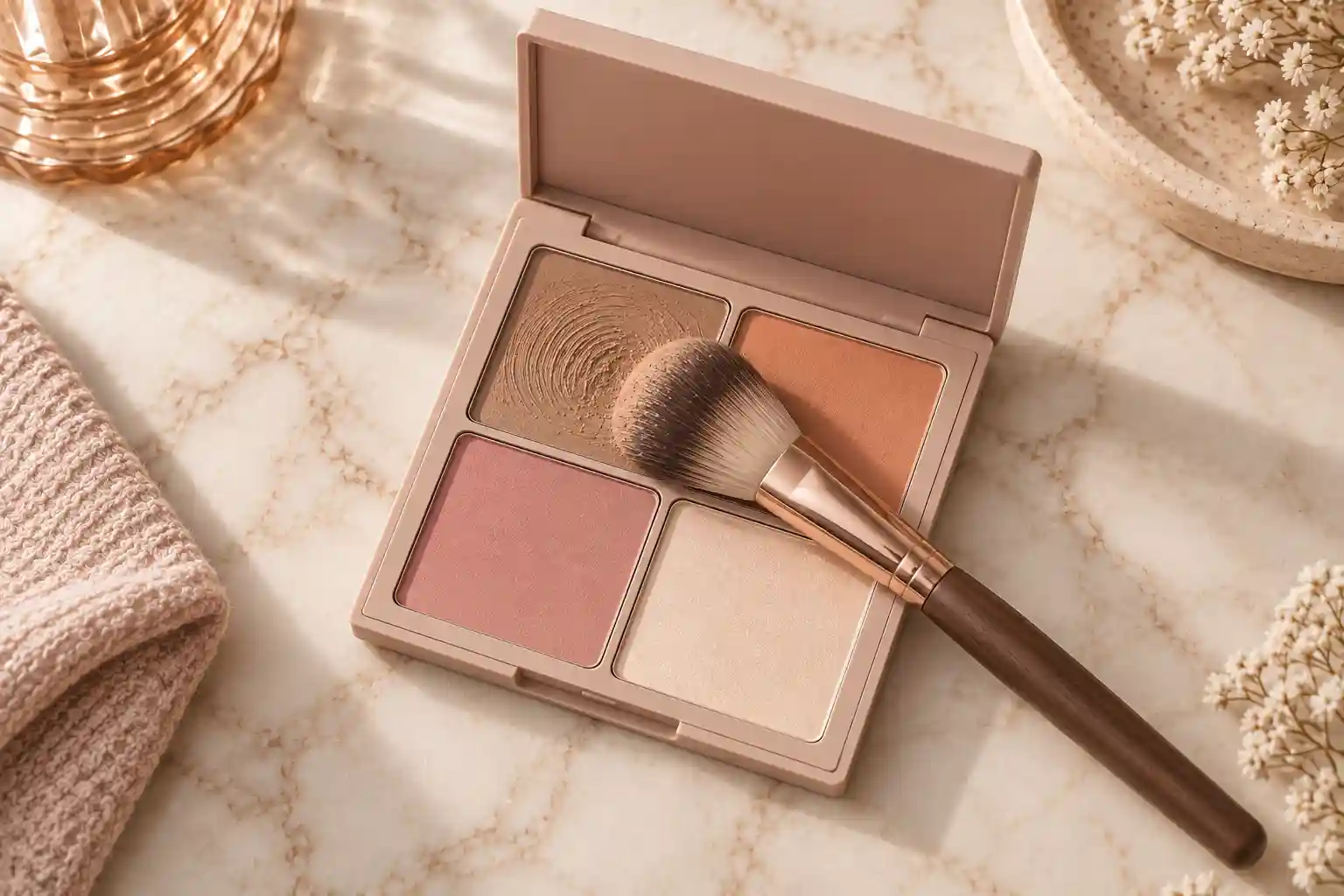
Short answer
Muddy contour reads as a dirty or grayish smudge rather than a natural shadow, and patchy contour has visible hard edges instead of a soft gradient. Both usually trace back to shade choice or incomplete blending rather than the technique itself being wrong.
Why it happens
True contour shades are meant to mimic shadow - cool-to-neutral toned and a couple of shades darker than skin. Warmer, more orange-toned bronzers are built to mimic sun-warmed skin, not shadow, and using one as a contour product can read as dirty or muddy rather than sculpted, especially on fairer skin where the contrast is more visible. Patchiness, separately, comes from stopping blending too early - contour needs to fade into skin with no visible line, which takes more blending than most other face products.
How to prevent or fix it
- Use a shade built for contour, not just any darker product. A cool-to-neutral, matte, shadow-mimicking shade blends in as depth; a warm shimmery bronzer sits on top as color. See Bronzer & Contour.
- Go two shades darker than skin, not more. Overly dark contour is harder to blend seamlessly and more likely to look like a visible stripe.
- Blend with a clean brush after placing product. Placing contour and then going back over the edges with a separate, clean fluffy brush removes the hard line that causes patchiness.
- Build gradually. Applying a small amount, checking, and adding more if needed avoids overcorrecting into a shape that's too heavy to blend out cleanly.
- Blend contour and foundation together at their border. A contour that's perfectly smooth on its own can still look patchy if there's a visible seam where it meets the surrounding foundation - work the edge, not just the center.