Blush Brush
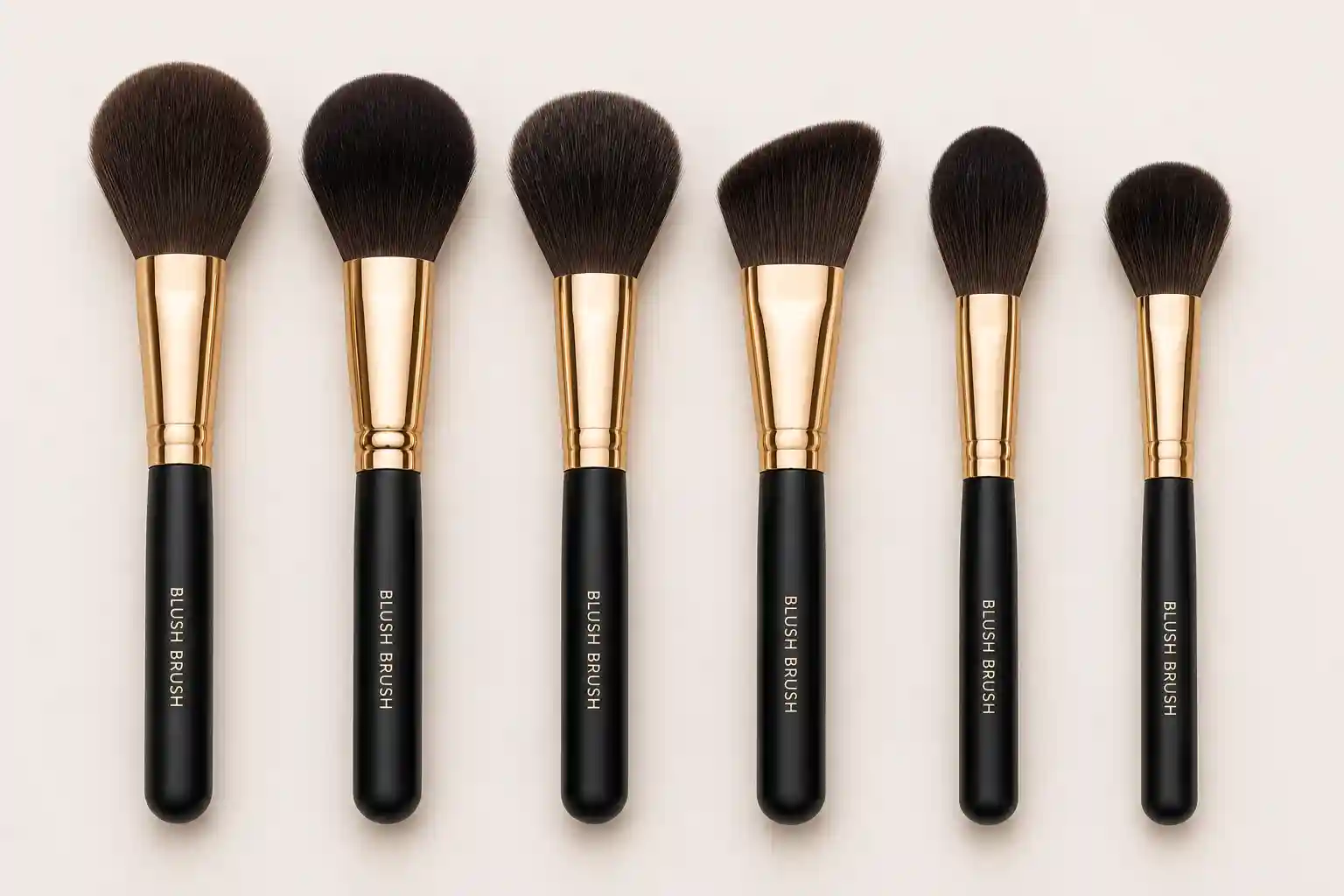
A rounded, medium-size brush shaped to deposit blush precisely on the apples of the cheeks.
What it is
A blush brush sits between a powder brush and a smaller detail brush in size - full enough to blend softly, but not so large that it's hard to control where color lands. Its dome or angled shape is built to follow the curve of the cheek.
How it works
A rounded, tapered head lets the brush deposit more product at its center and less at the edges, which naturally creates a soft gradient rather than a hard-edged circle of color when swept across the cheek. Angled versions work similarly but let the flat edge follow the cheekbone precisely, useful for placing color along a specific line before blending it upward.
How to choose one
- Domed brushes suit a soft, diffused application - good for cream or powder blush blended in circular motions.
- Angled brushes suit more precise placement along the cheekbone, especially with powder blush that needs a defined sweep upward toward the temple.
- Medium density balances control and blendability - too fluffy picks up too little product; too dense can deposit color too intensely for a subtle flush.
How to use it
- Swirl lightly in the powder and tap off a little, enough that no loose powder falls, without emptying the brush.
- Place it on the upper part of the cheek, just above the fullest point, and sweep up and back toward the temple. See Blush.
- For cream blush, tap with a domed brush to place the color, then blend the edges with small circles.
- Use the clean edges of the brush to soften the outline, so there's no visible stop to the color.
Care and when to replace
- Wash it every one to two weeks, or more often if you use it with cream products - see Tools Cleaning & Hygiene.
- Keep separate brushes for blush and contour, or wipe the brush clean on a cloth between them.
- Replace it when it sheds or loses its shape - see Why do makeup brushes shed bristles?.
Common mistakes
- Using the same brush for blush and contour without cleaning between - leftover warm blush pigment can muddy a cool contour shade and vice versa.
- Tapping off too much product before application, requiring several passes that build color unevenly instead of one confident, blended sweep.
- Applying too low on the cheek, which drags the face down instead of lifting it toward the temple.