Cream vs. Powder Blush
Cream and powder blush apply differently, sit in the routine at different points, and suit different skin types.
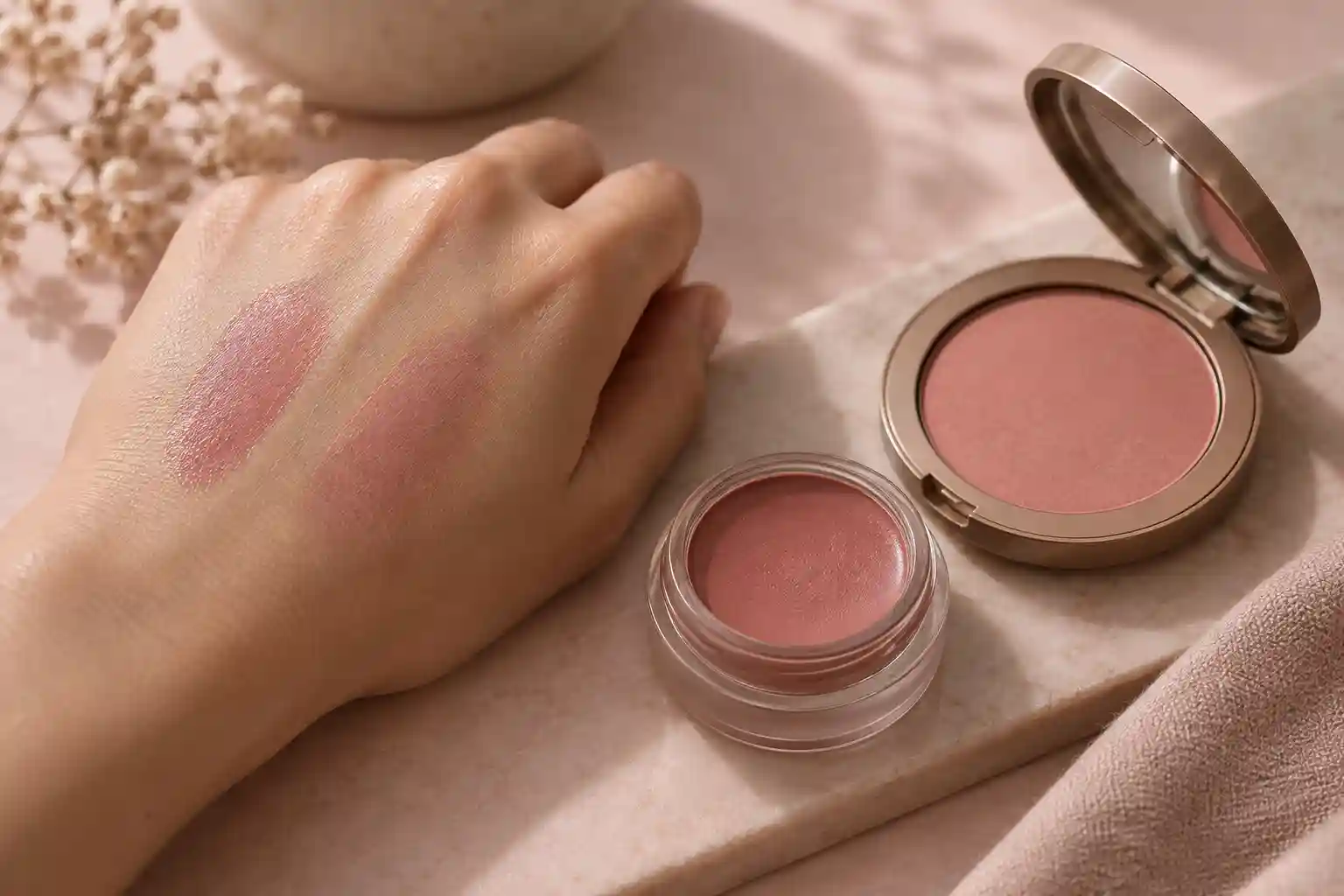
Cream and powder blush both add color to the cheeks, but they behave differently enough that swapping one in for the other in a routine isn't a straight substitution.
Cream blush
Cream blush blends into skin with fingers or a damp sponge and tends to look more like a natural flush pushed up from underneath, rather than color sitting on the surface. It generally goes on before setting powder, early in the base routine, since powder applied on top of it can mute the color. It suits normal-to-dry skin especially well, since it doesn't add texture the way powder can on drier areas, but it's less forgiving on oily skin, where it can shift or fade faster without help from a setting product.
Powder blush
Powder blush applies with a brush, after foundation is set with powder, and is easier to build gradually and blend precisely - useful for techniques like draping along the cheekbone. It holds up better than cream on oilier skin, since it has less to slide on, and it's the more forgiving option for touch-ups later in the day since it can go directly over other powder products. It can look slightly more "applied" rather than a natural flush, and it's more likely to emphasize dry, flaky texture on drier skin types.
Bottom line
Cream blush generally suits normal-to-dry skin and a more natural, dewy look, applied earlier in the routine before powder. Powder blush generally suits oilier skin, more precise placement, and easier midday touch-ups. On oil-prone skin that still wants a natural finish, layering a cream blush underneath a powder blush in a matching shade is a common way to get the longevity of powder with some of cream's natural look.