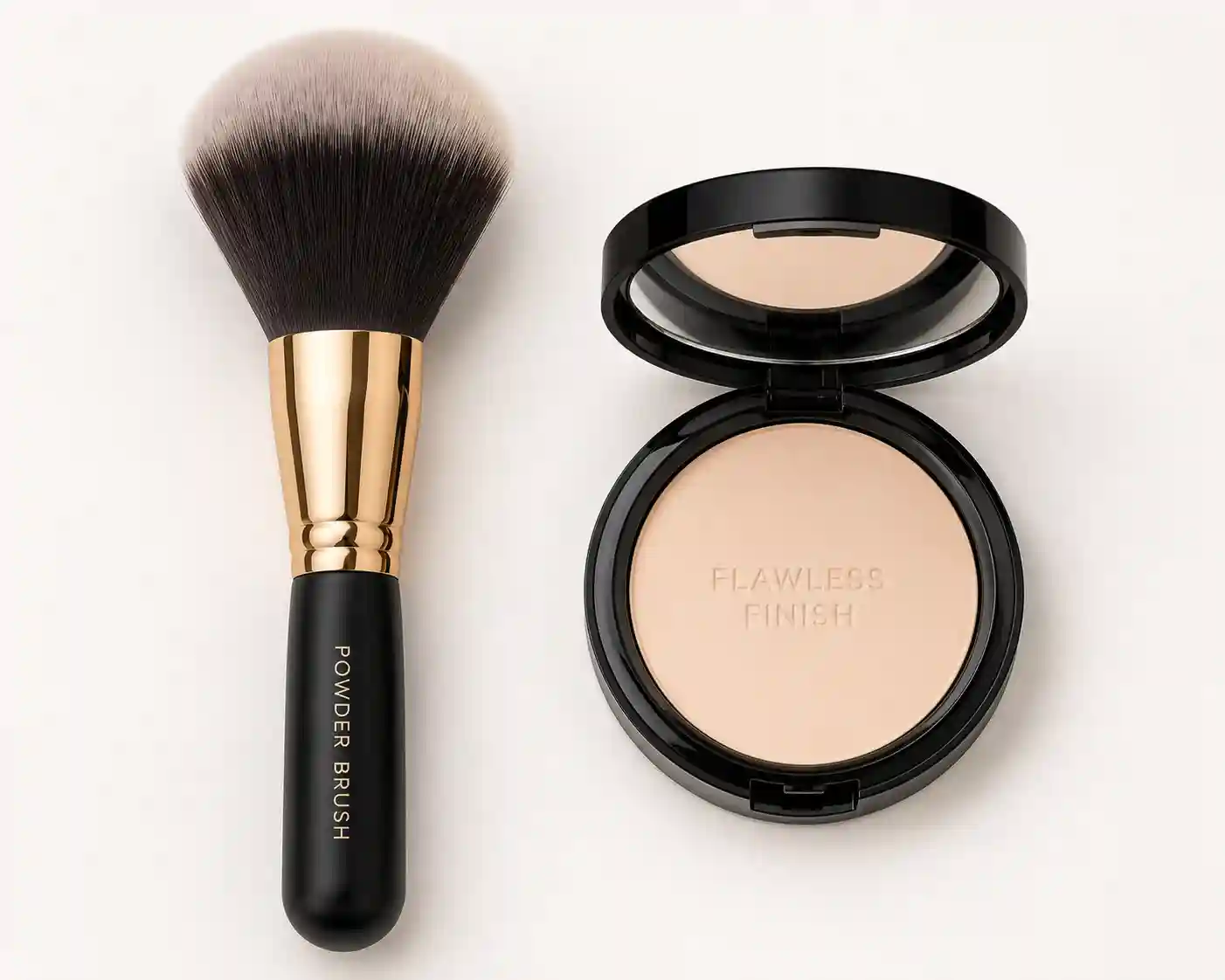
Powder Brush
A large, fluffy brush used to apply loose or pressed powder evenly across the face.
What it is
A powder brush is large, soft, and full - built to pick up a light, even amount of powder and sweep it broadly across the face without depositing it heavily in any one spot. Its size is the point: it's meant to set an entire face quickly, not to place product precisely.
How it works
Loosely packed, soft bristles hold powder in the air gaps between hairs rather than compacting it, so a light tap or swirl before application releases most of the excess and leaves only a fine, even layer to sweep on. The large surface area covers the whole face in a few strokes, which matters for setting powder - the goal is a thin, uniform layer, not concentrated coverage.
How to choose one
- Natural hair bristles are traditionally preferred for powder because they hold and release fine powder particles well; high-quality synthetic alternatives now perform comparably.
- Size to your face, not to the brush that looks most dramatic - an oversized brush can be hard to control around smaller features like the nose.
- A slightly domed or rounded shape blends onto contours of the face more naturally than a flat-cut one.
How to use it
- Swirl lightly in the powder, then tap the handle against the edge of the container or your hand to shake loose the excess.
- Start where you need it most - usually the T-zone - using light sweeps or small, loose circles.
- Use what's left on the brush for the rest of the face, so the outer cheeks and other drier areas get only a fine dusting. See Powder.
- Switch tools for under the eyes and around the nose. A smaller brush or a powder puff is easier to control in small areas than a large brush.
Care and when to replace
- Wash it every one to two weeks. Use a gentle cleanser and lukewarm (not hot) water, especially on natural hair - see Tools Cleaning & Hygiene.
- Dry it flat or angled bristles-down, so water doesn't run into the handle and loosen the glue.
- Replace it when it sheds steadily or the bristles feel coarse - see Why do makeup brushes shed bristles?.
Common mistakes
- Dipping directly into loose powder without tapping off the excess first, which deposits far more than intended in one pass.
- Pressing the brush into skin instead of sweeping it, which can push powder into pores and fine lines rather than laying it evenly on top.
- Using a powder brush for cream or liquid products - the loose bristle structure that makes it ideal for powder makes it a poor tool for anything wetter.