Setting Powder vs. Setting Spray
Powder and spray both extend makeup wear, but they work at different stages of the routine and solve different problems.
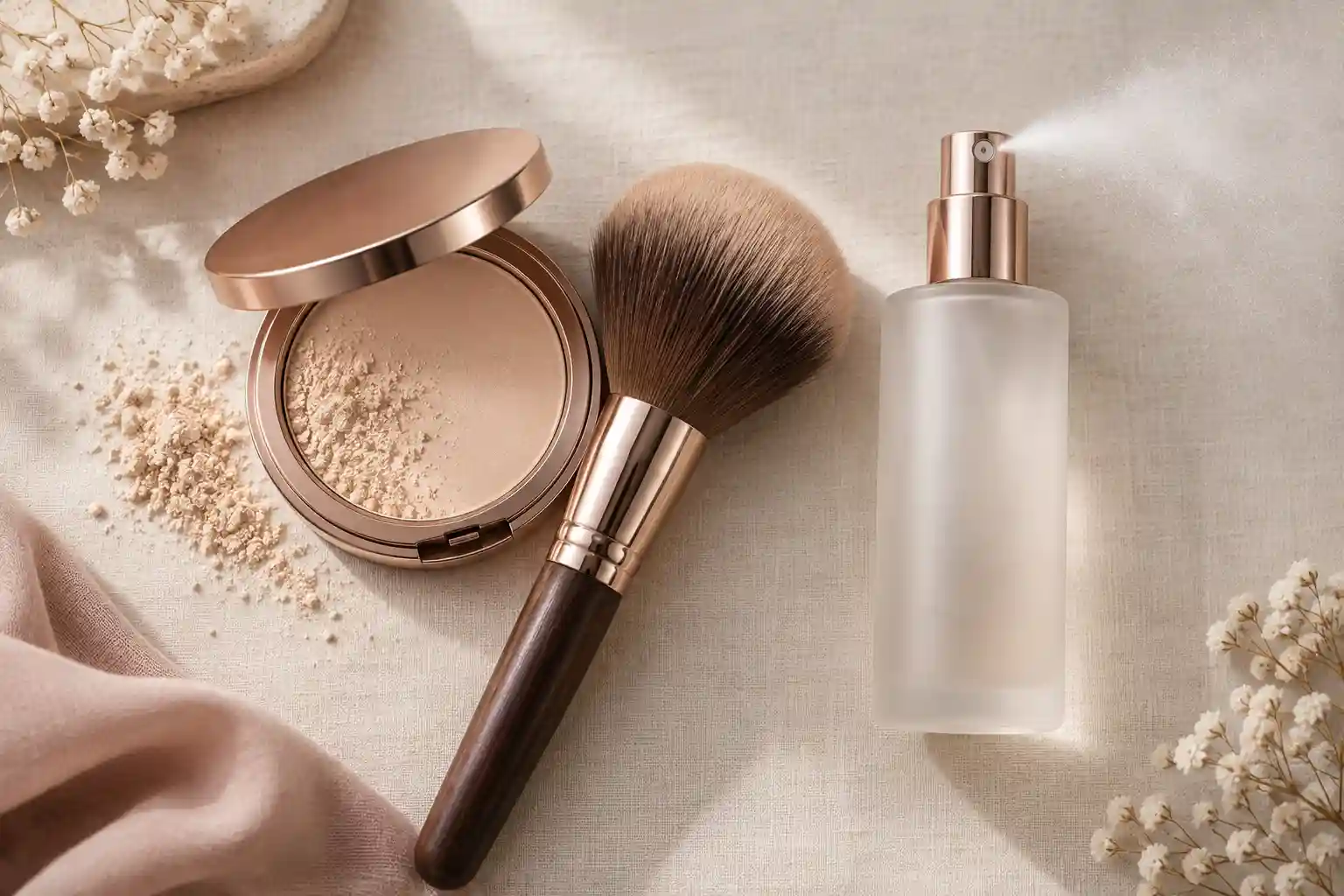
Setting powder and setting spray are often treated as interchangeable "make it last longer" steps, but they intervene at different points and neither fully replaces the other.
Setting powder
Setting powder is applied over liquid or cream products, usually while they're still fresh, to absorb excess moisture and oil and reduce shine. It's especially effective on oily areas like the T-zone and is the main defense against creasing under the eyes. It's applied mid-routine, before the rest of the face is finished, and it's a physical layer that can build up or look cakey if overused. See Powder.
Setting spray
Setting spray is applied at the very end, over a fully finished face, and deposits a thin film that helps hold everything in place and gives the skin a more cohesive, less powdery finish if a lot of powder was used. It doesn't absorb oil the way powder does - it's better thought of as a light seal than an oil-control step - and it can't compensate for makeup that wasn't properly set with powder in the first place. See Why does setting spray fail to keep makeup in place?.
Bottom line
Powder controls oil and prevents creasing during the routine; spray seals and finishes the look afterward. They address different failure points, which is why using only one often leaves a gap - oily skin that's sprayed but never powdered will still break down through the T-zone, and skin that's heavily powdered but never sprayed can look more matte and powdery than intended. Most long-wear routines use both, in that order.