Why does setting spray fail to keep makeup in place?
Setting spray works on top of good prep and application - it can't compensate for skipped steps underneath it.
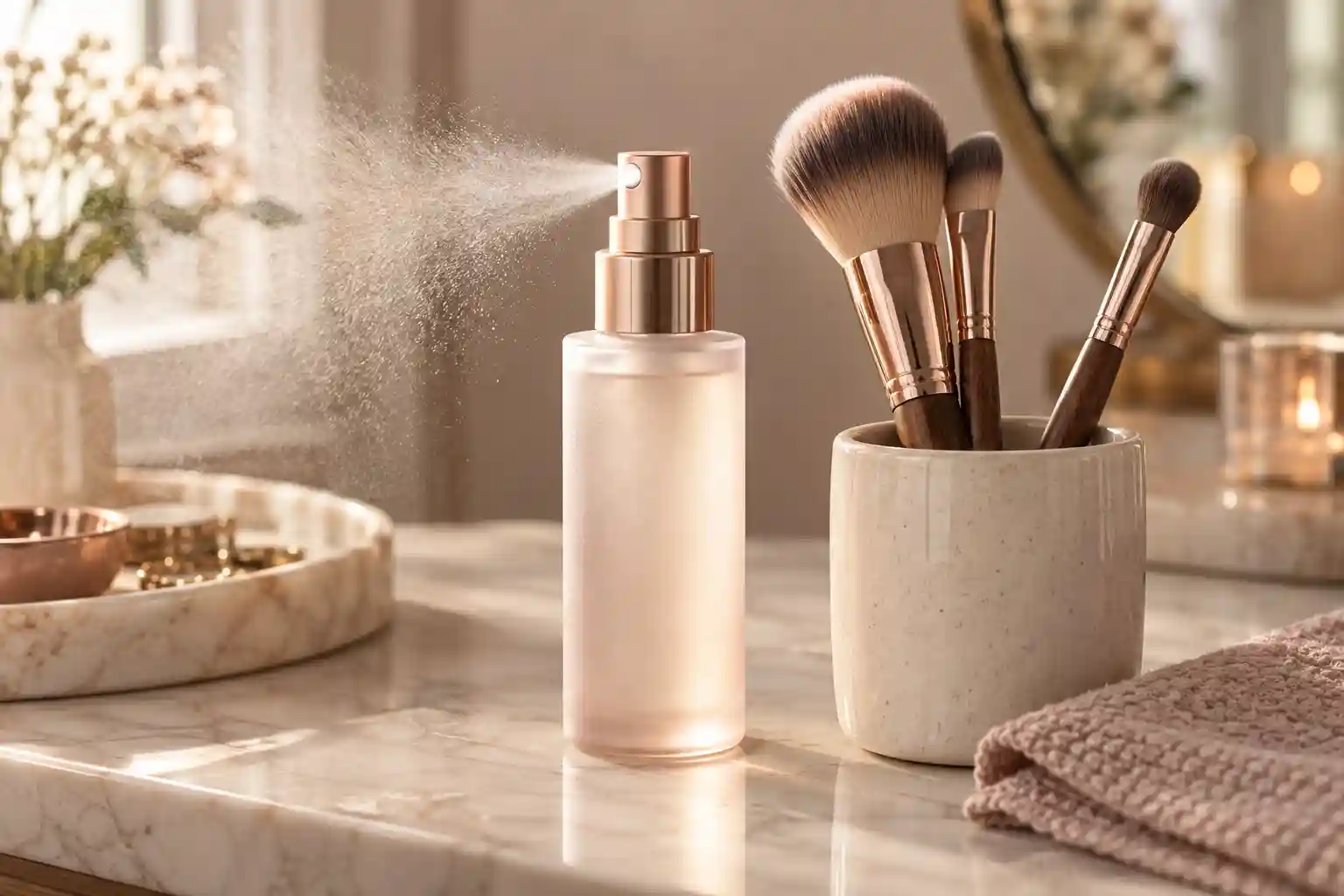
Short answer
Setting spray is the last step in a routine, not a fix for everything that happens before it. If makeup still fades, slides, or breaks down during the day, the spray usually isn't the actual point of failure - what's underneath it is.
Why it happens
Setting spray works by depositing a thin film over finished makeup that helps hold everything in place and reduces the surface's tendency to grab moisture or oil. That film has limits: it can't fix makeup that was never set with powder where it needed to be, can't compensate for skin that wasn't primed for its actual oil level, and can't extend the wear of a formula that simply isn't long-lasting to begin with.
How to prevent or fix it
- Address oil control earlier in the routine. A mattifying primer suited to oily areas does more for longevity than a setting spray applied at the very end. See Primer.
- Actually set with powder before spraying. Setting spray is meant to lock in a powder-set look, not replace the powder step entirely.
- Apply from the correct distance, in a light layer. Spraying too close or too heavily can reactivate and move makeup rather than sealing it - a few light passes from arm's length is usually enough.
- Let it dry fully before touching the face. Blotting or touching skin while the spray is still wet undoes a lot of what it was meant to do.
- Check the spray's formula matches the goal. Some sprays are built for glow, some for pure matte hold, and some for long-wear specifically - a mismatch between the spray's purpose and what the look actually needs will underperform regardless of technique.