Why does a beauty sponge leave streaks?
Streaking from a sponge is almost always a wrong-motion problem - dragging or wiping instead of bouncing product in.
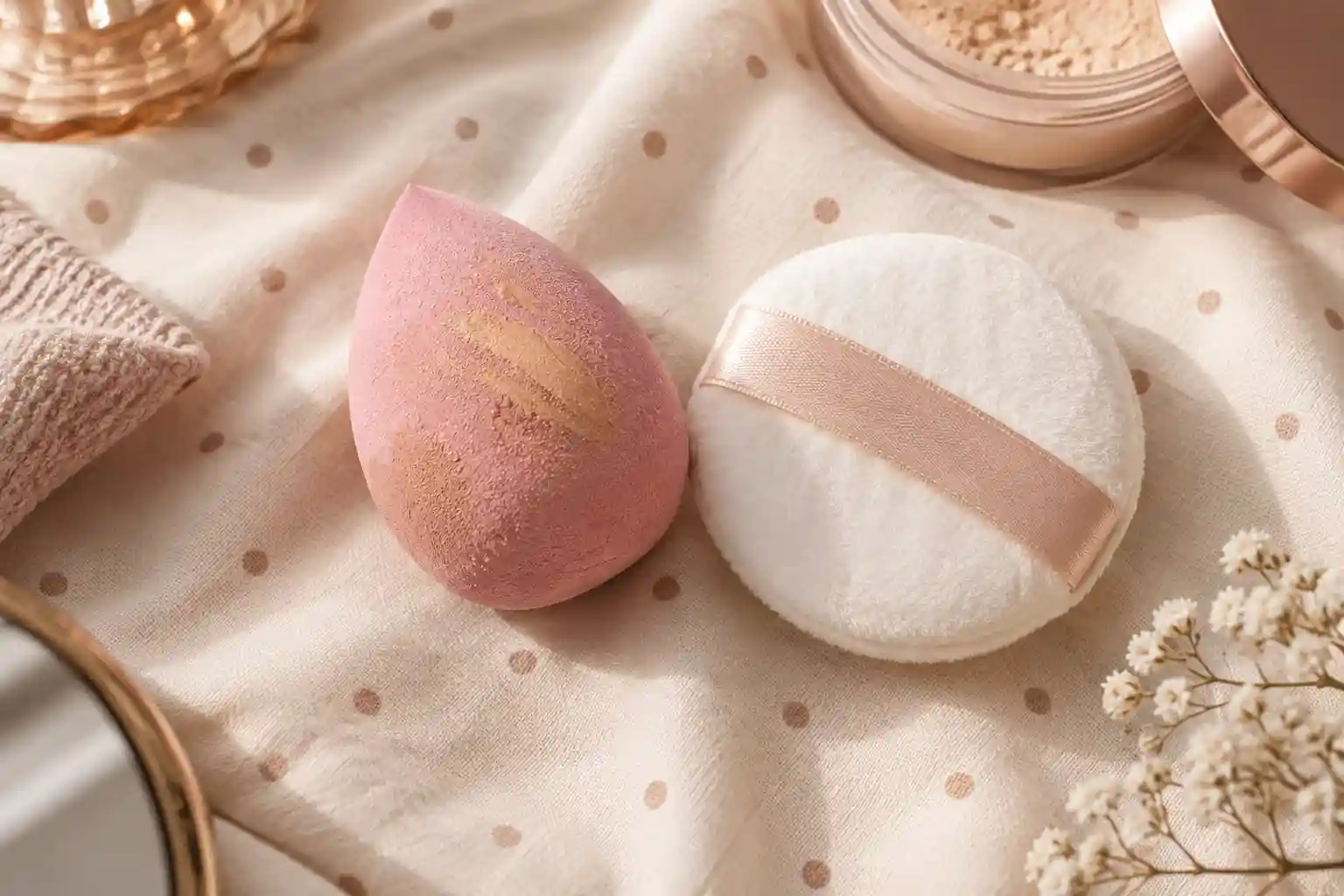
Short answer
Streaking is visible lines or uneven patches of foundation left behind after blending with a sponge, usually most noticeable around the nose, jawline, and hairline. It's almost always about application motion, not the sponge itself being the wrong tool.
Why it happens
A beauty sponge is designed to deposit product through a bouncing, stippling motion that presses product into skin evenly. Dragging or wiping it across the face the way a brush is used pulls product unevenly instead, especially over textured or contoured areas of the face, leaving visible streaks where the motion pulled more product one direction than another. A dry sponge makes this worse, since it absorbs product unevenly and releases it inconsistently compared to a properly dampened one.
How to prevent or fix it
- Dampen the sponge before using it. A dry sponge absorbs product into itself rather than depositing it evenly onto skin - wet and wrung out until just damp is the standard starting point. See Beauty Blender.
- Bounce, don't drag. A stippling, dabbing motion presses product into skin evenly; a wiping motion pulls it unevenly and is the direct cause of most streaking.
- Use the rounded edges for tight areas. The pointed or narrow end works around the nose and eyes; the wide rounded body works for open areas like cheeks and forehead - using the wrong part of the sponge for an area makes even coverage harder.
- Don't overload the sponge at once. A small amount blended in, then added to as needed, blends more evenly than trying to spread one large amount across the whole face.
- Replace sponges regularly. A worn, torn, or heavily stained sponge no longer releases product evenly regardless of technique.